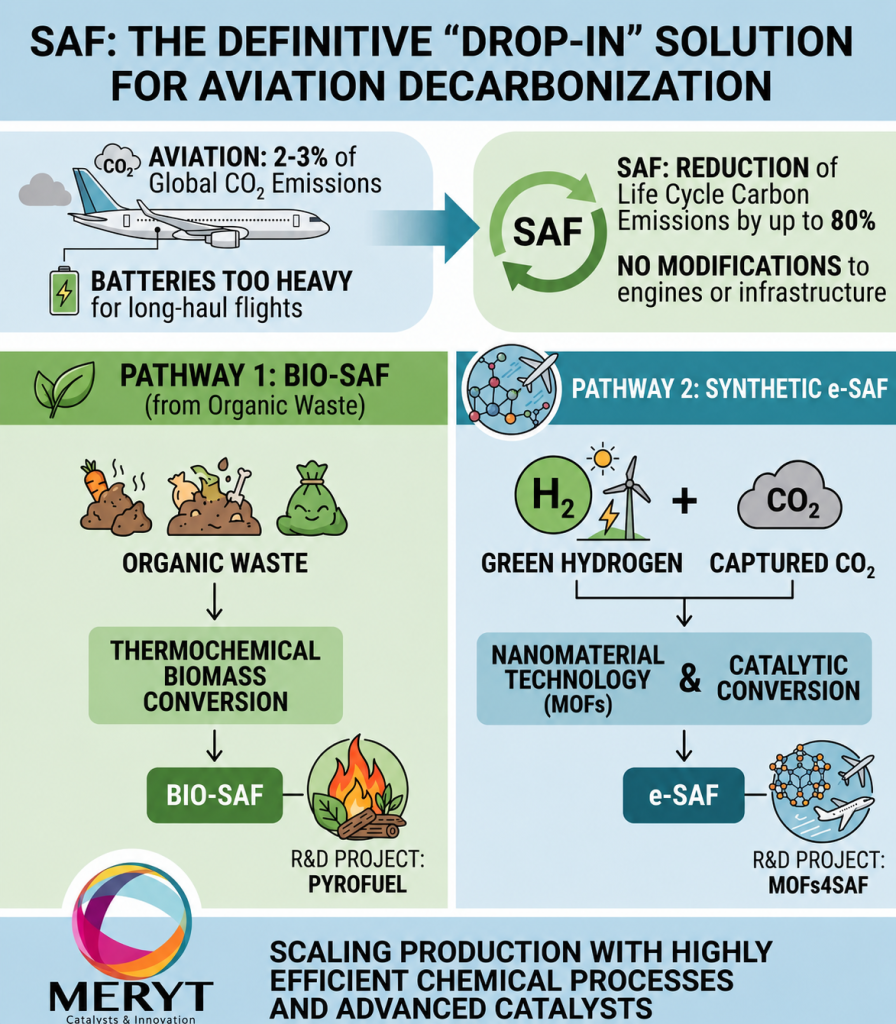
Aviation accounts for approximately 2-3% of global CO2 emissions. While the automotive industry is rapidly electrifying, long-haul flights face a major physical hurdle: current battery technology is far too heavy to power an aircraft across oceans. This is where Sustainable Aviation Fuel (SAF) steps in as the definitive solution for achieving Net Zero emissions in the aerospace sector.
SAF is a high-quality aviation fuel produced from renewable feedstocks rather than crude oil. Its greatest advantage is that it is a “drop-in” fuel. Its chemical structure is almost identical to conventional kerosene (Jet A/A-1), meaning it can be blended with fossil fuels and used in existing engines and airport infrastructure without any technical modifications.
Not all SAF is created equal. Currently, the industry focuses on two main technological routes:
Derived from waste fats, used cooking oils, agricultural residues, or non-food crops. Through processes like Hydroprocessed Esters and Fatty Acids (HEFA), these waste streams are refined into high-performance fuel.
Often considered the “holy grail” of aviation fuels. It is produced by combining Green Hydrogen (generated via renewable energy) with CO2 captured directly from the atmosphere or industrial sources. This pathway offers a near-circular carbon cycle and is highly scalable.
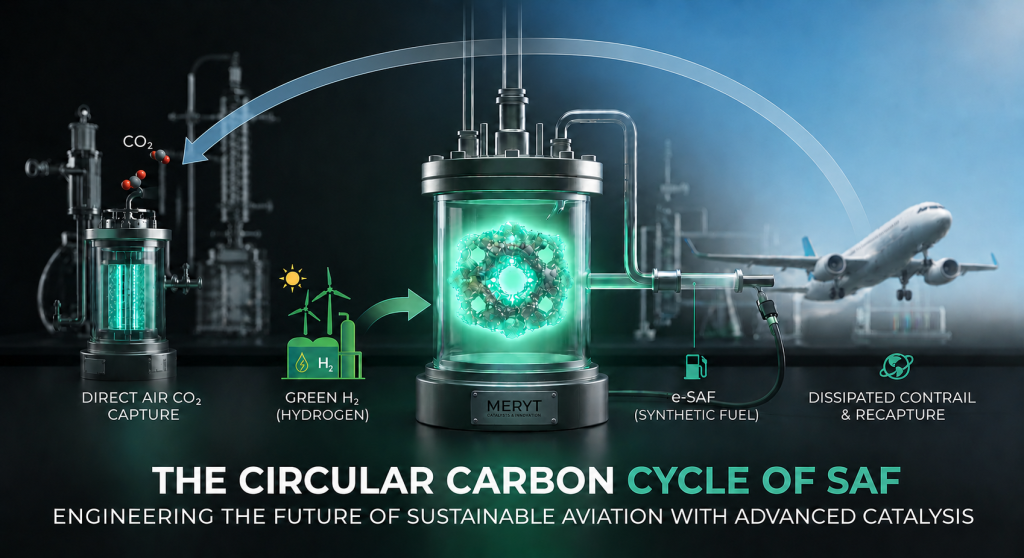
Using SAF can reduce life-cycle carbon emissions by up to 80% compared to traditional jet fuel. Beyond CO2, SAF produces fewer particulates and sulfur compounds, improving air quality and reducing the formation of contrails, which also contribute to global warming.
The primary challenge for SAF today is scalability. Transitioning from pilot plants to global production requires highly efficient chemical processes. The development of advanced catalysts and the optimization of refining pathways are the “engine room” of this transition—critical for lowering production costs and making SAF competitive with fossil kerosene.
As global frameworks like the RefuelEU Aviation initiative set ambitious blending mandates for the coming years, the race for sustainable flight has moved from theory to industrial reality. Meeting these goals requires more than just goodwill; it demands a fundamental shift in chemical innovation and process engineering to ensure we can keep the world connected while leaving a cleaner sky for future generations.
This is precisely where MERYT Catalysts & Innovation, alongside our strategic partners takes a leading role.
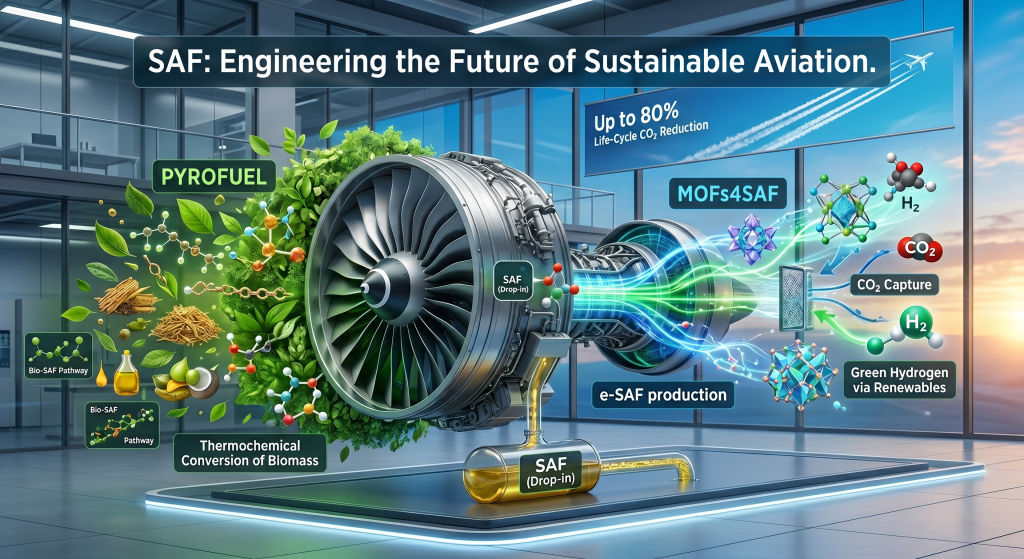
We don’t just observe the industry’s evolution; we actively engineer the chemical foundations that make it possible. Our current R&D strategy focuses on overcoming the scalability barrier through two pioneering projects:
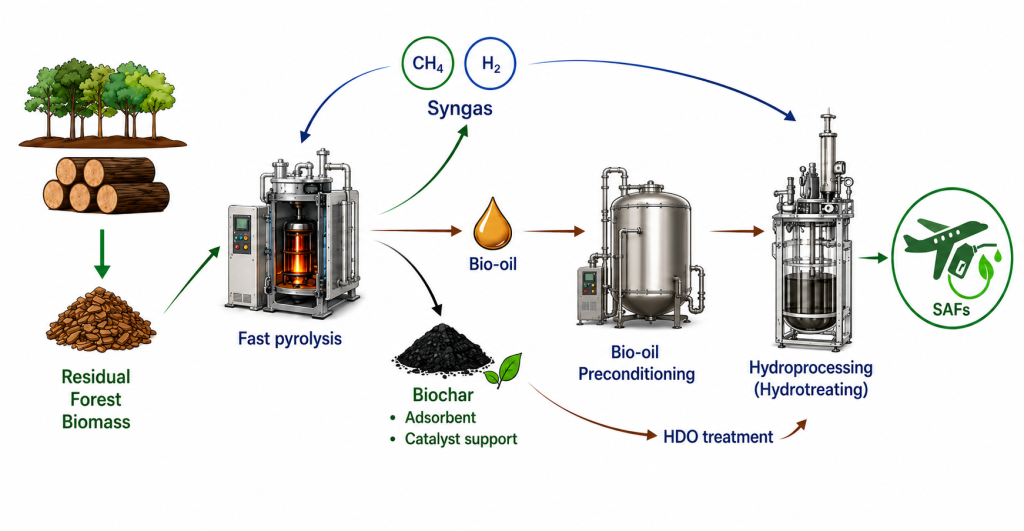
In collaboration with our strategic partners, we are advancing the thermochemical conversion of biomass and organic waste. By optimizing the catalytic hydrotreatment of pyrolysis oils, we transform complex waste into high-quality SAF that meets the most demanding international aviation standards.
Working with a network of expert collaborators, we are exploring the frontier of nanotechnology and e-fuels. Through the use of Metal-Organic Frameworks (MOFs), we are enhancing the efficiency of CO2 capture and its subsequent catalytic conversion, paving the way for a more energy-efficient and commercially scalable production of synthetic fuels.
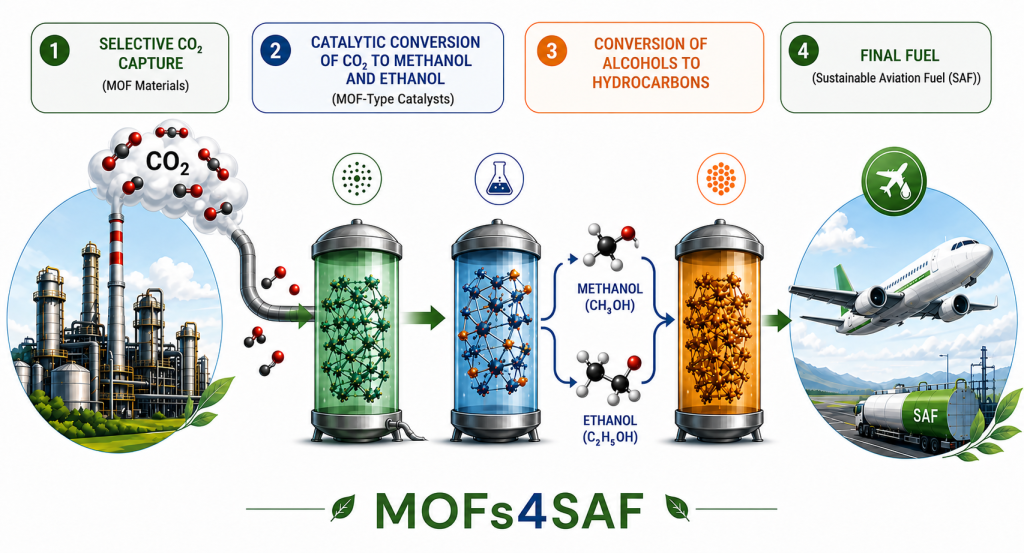
Aviation accounts for 2-3% of global CO2 emissions, and with batteries being too heavy for long-haul flights, Sustainable Aviation Fuel (SAF) has emerged as the definitive “drop-in” solution. Capable of reducing life-cycle carbon emissions by up to 80% without requiring modifications to current aircraft engines or infrastructure, SAF is produced via two main routes: Bio-SAF from organic waste and synthetic e-SAF from green hydrogen and captured CO2. Scaling this production to meet global mandates requires highly efficient chemical processes and advanced catalysts to lower costs. At MERYT Catalysts & Innovation, we are actively engineering these chemical foundations through our pioneering R&D projects, PYROFUEL and MOFs4SAF, focusing on the thermochemical conversion of biomass and advanced nanotechnology for CO2 capture.
🔗 [Click here to meet the official collaborators and strategic partners involved in these projects]