
Zeolitic Imidazolate Framework-8 (ZIF-8) has become one of the most extensively studied Metal-Organic Frameworks (MOFs) across industrial catalysis, sensing, and nanomedicine. Composed of Zn2+ ions coordinated by 2-methylimidazolate linkers, ZIF-8 features a sodalite-type topology with large internal cavities (11.6 Å) connected by narrow microporous apertures (3.4 Å). This architecture provides exceptional thermal and chemical stability in alkaline environments while enabling high cargo-loading capacities.
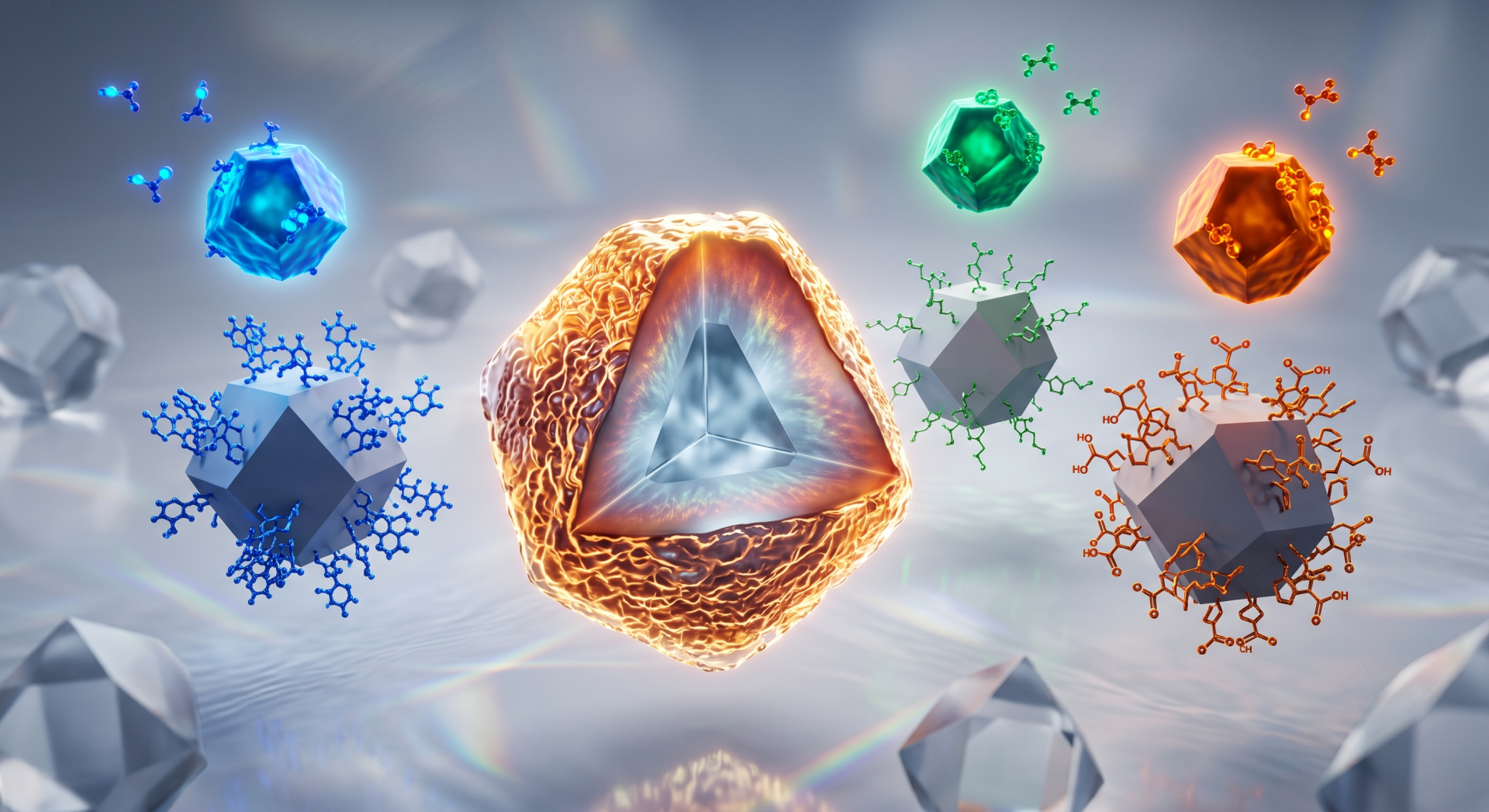
A recent study published in Inorganic Chemistry demonstrates a post-synthetic strategy to graft primary amino (-NH₂), aldehyde (-CHO), and carboxylic acid (-COOH) functionalities onto nanosized ZIF-8 crystals while preserving their native morphology. The approach relies on Solvent-Assisted Ligand Exchange (SALE) in methanol at 60 °C.
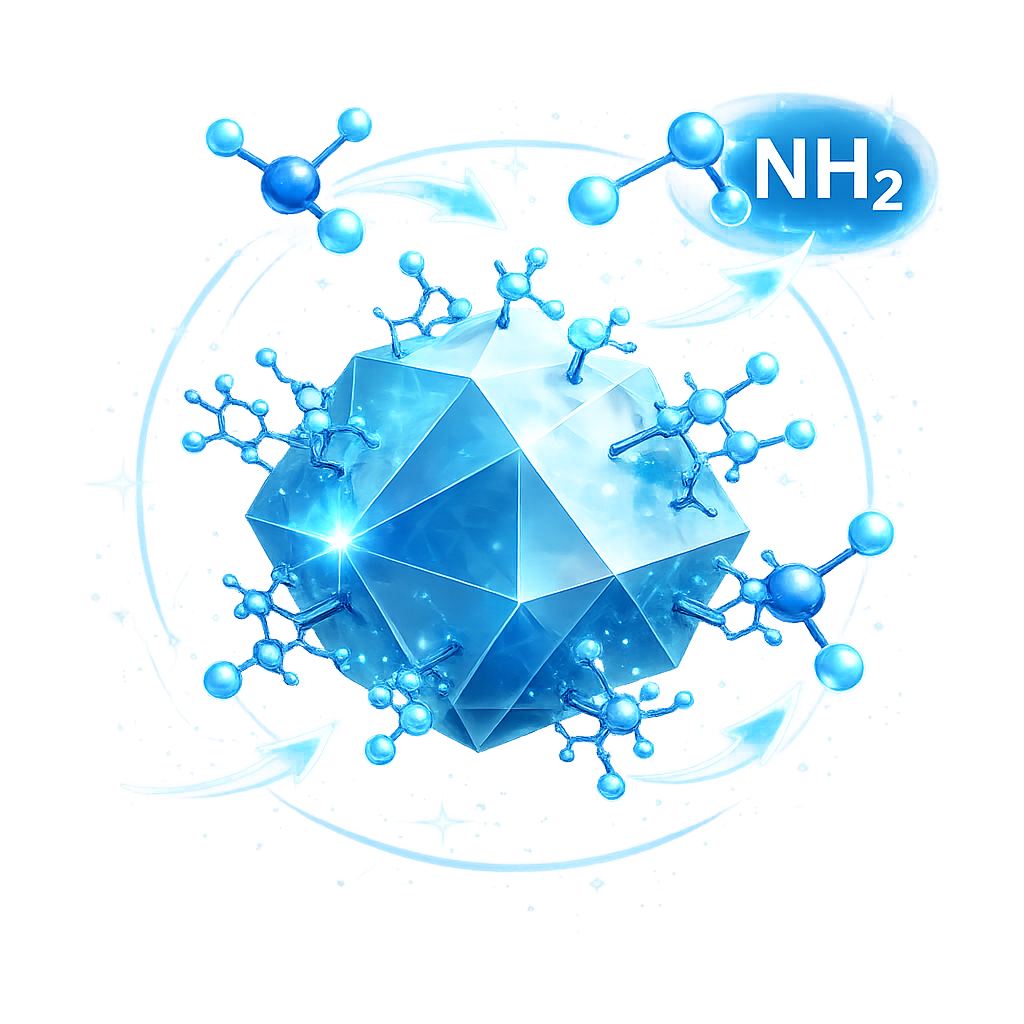
Native linkers were exchanged with 3-amino-1,2,4-triazole, selected for its superior oxidation stability. Reaction times of 15 min, 1 h, and 3 h yielded total ligand exchanges of 7%, 11%, and 15%, respectively.
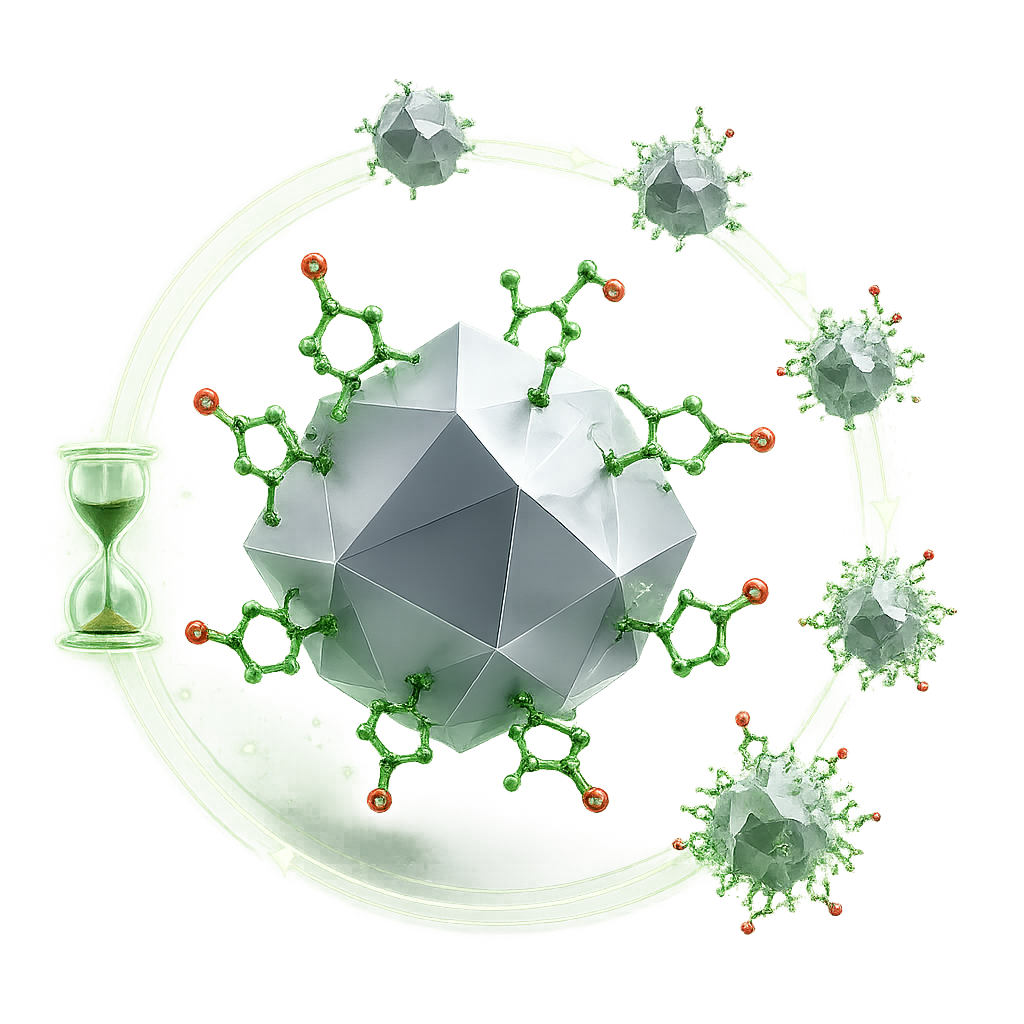
Using imidazole-2-carbaldehyde, reaction times of 1, 3, and 6 hours achieved 4%, 7%, and 10% exchange, respectively, reflecting a slower diffusion rate for the aldehyde derivative.
Direct SALE using imidazole-2-carboxylic acid proved ineffective. To overcome this limitation, researchers developed a two-step post-synthetic modification:
ZIF-8 nanoparticles were first functionalized with 3-amino-1,2,4-triazole to achieve a 15% amino-group exchange.
The amino-functionalized particles were stirred in a solution of glutaric anhydride in anhydrous acetonitrile at room temperature for 24 hours. This quantitative ring-opening reaction converted 95% of the primary amino groups into terminal carboxylic acid moieties via stable amide bond formation, confirmed by FTIR spectroscopy (broad carbonyl band appearance at 1577 cm-1) and quantitative 1H NMR.
A primary risk during post-synthetic modification is framework etching or collapse. Experimental characterization confirmed that the functionalized materials retain the structural integrity of pristine ZIF-8:
| MOF Variant | Total Ligand Exchange (%) | BET Surface Area (m²/g) | Structural Morphology |
|---|---|---|---|
| Pristine ZIF-8 | 0% | 1784 m²/g | Rhombic Dodecahedral |
| ZIF-8-NH2 | 7% | 1770 m²/g | Rhombic Dodecahedral |
| ZIF-8-CHO | 7% | 1584 m²/g | Rhombic Dodecahedral |
To verify that the introduced groups were chemically accessible on the external surface—rather than buried within inaccessible internal pores—three standard conjugation reactions were executed:
This surface engineering methodology transforms ZIF-8 from a passive porous carrier into a chemically versatile platform. By providing accessible -NH2, -CHO, and -COOH anchors, industrial chemists can covalently graft targeting ligands, polymer coatings, or organometallic catalytic complexes directly onto the MOF surface without obstructing its internal micropores.
At MERYT Catalysts & Innovation, we supply high-performance Metal-Organic Frameworks, including high-purity ZIF-8, designed to meet stringent crystallinity and surface-area standards. Our materials provide the reliable structural foundation required for advanced surface functionalization, solvent purification, and industrial catalysis.