MOFs as "Atmospheric Sponges": Engineering Water Harvesting from Arid Air
By 2050, nearly half of the world’s population will live in water-stressed regions due to arid climates, depleting groundwater resources, and limited access to clean drinking water. While the atmosphere contains an immense reservoir of moisture—holding between 0 and 30 grams of water per cubic meter, which represents more water than in all the rivers on Earth—extracting it efficiently in arid environments remains a major engineering challenge.
The Engineering Bottleneck:
In arid desert regions where relative humidity (RH) is typically below 50%, the dew point is extremely low. For instance, air at 20% RH and 30 °C has a dew point of approximately 4°C. Consequently, conventional atmospheric water generators that rely on direct cooling condensation cycles fail in low-humidity conditions, as cooling air to such low temperatures is energy-intensive and uneconomical. Furthermore, traditional desiccants such as inorganic salts, zeolites, and porous silica suffer from slow uptake and release kinetics, low water sorption capacity at low RH, or high adsorption energy that requires excessive heat for regeneration.
The Breakthrough: Cooperative Adsorption and Pore "Seeding" by Nobel Laureate Prof. Omar M. Yaghi
A landmark study published in ACS Central Science by Nobel Prize winner in Chemistry Prof. Omar M. Yaghi and his co-author Wentao Xu demonstrates how Metal–Organic Frameworks (MOFs) overcome these limitations through reticular chemistry. Porous crystalline zirconium MOFs constructed from Zr6O4(OH)4 secondary building units (SBUs) and carboxylate organic linkers exhibit unprecedented water uptake at low relative humidity with facile release kinetics.
Step-Shaped Uptake Isotherms
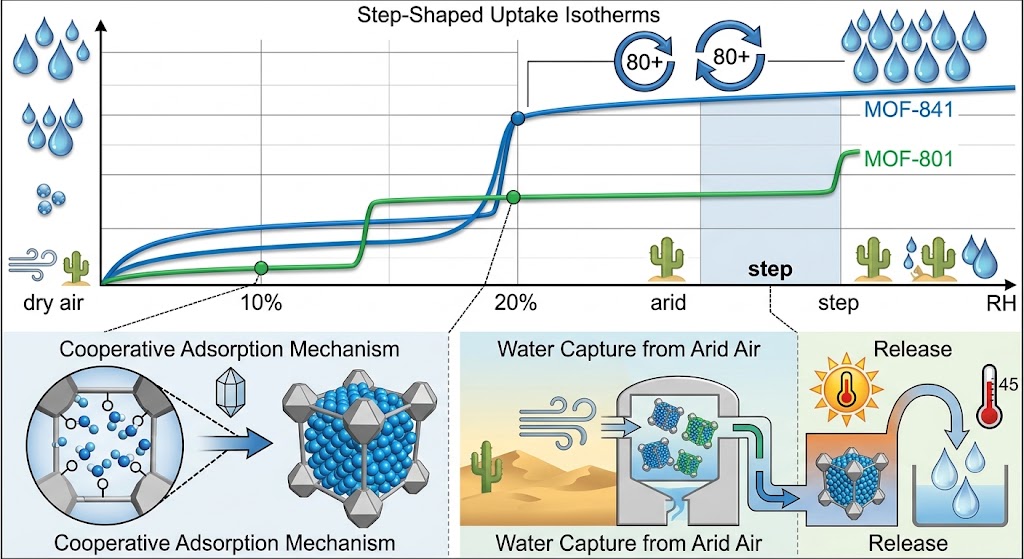
In their work, MOF-841 showed exceptional water uptake maintained over at least 80 adsorption–desorption cycles, featuring a sharp step-shaped isotherm at 25 °C around 20% RH. MOF-801 [Zr6O4(OH)4(fumarate)6] exhibited an even lower step uptake at just 10% RH. This step profile indicates a cooperative adsorption mechanism that allows water capture from arid air and release at mild temperatures around 45 °C.
Atomic-Scale Seeding Mechanism
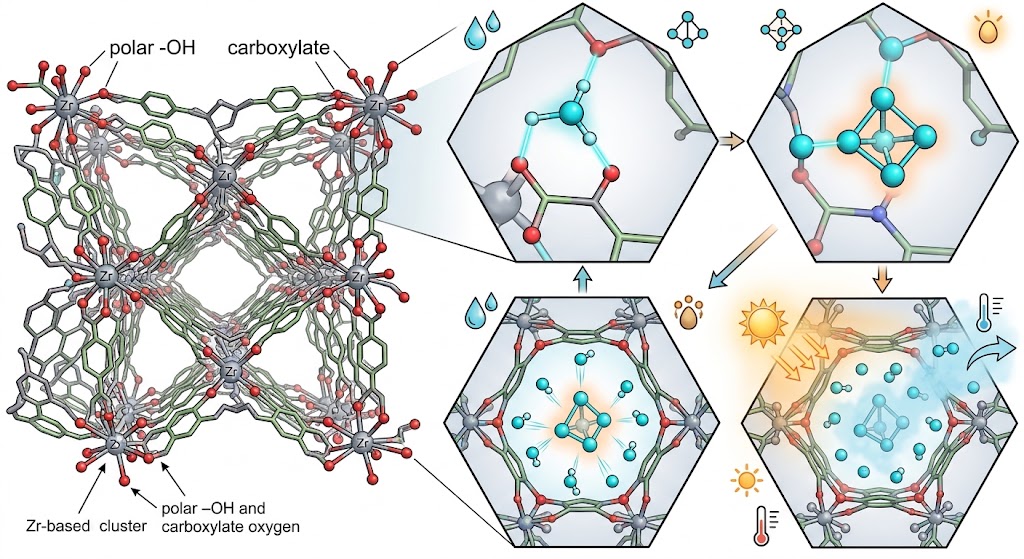
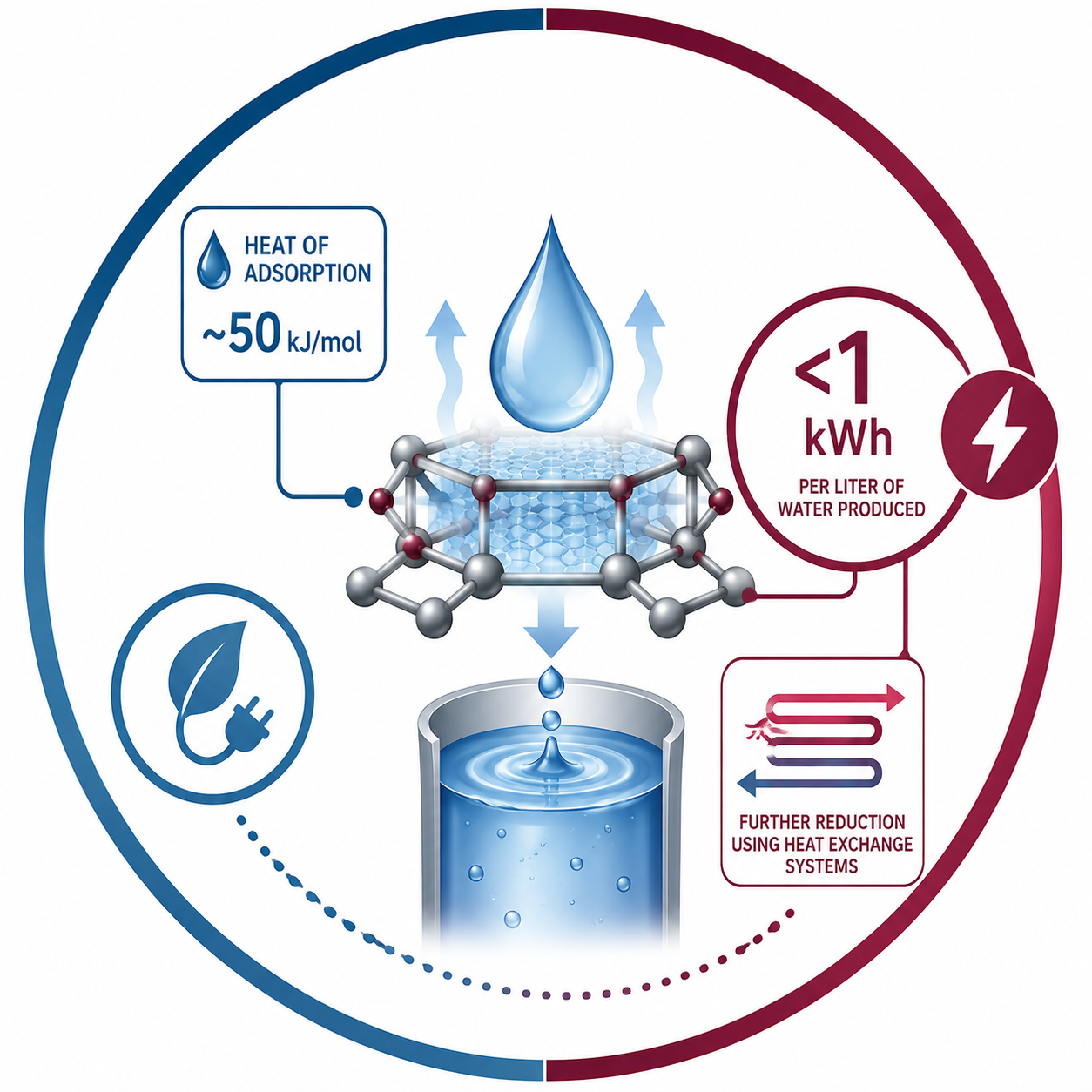
Single-crystal X-ray and neutron diffraction studies of MOF-801 revealed two distinct tetrahedral and octahedral micropores. Water molecules bind first to the polar -OH and carboxylate groups of the zirconium SBUs, forming tetrahedrally and cubically arranged hydrogen-bonded water clusters. These initial clusters act as “seeds” that attract additional water molecules into the pores. Because the organic linkers are nonpolar, the overall water binding energy remains low (~50 kJ/mol), enabling desorption under mild heating.
From Laboratory Discovery to Desert Field Deployment
To translate this molecular mechanism into practical water production, researchers developed and tested multiple generations of MOF-based water harvesters in extreme desert climates. To illustrate the progression and performance of these devices, the following table summarizes the key experimental milestones across different harvester generations:
Importantly, field experiments confirmed that the harvested water is ultrapure, showing zero detectable metal leaching, organic compounds, or atmospheric pollutants. Because water binds more strongly to the hydrophilic SBU seeds than air contaminants such as CO2 or hydrocarbons, the MOF acts as an effective natural nanofilter.
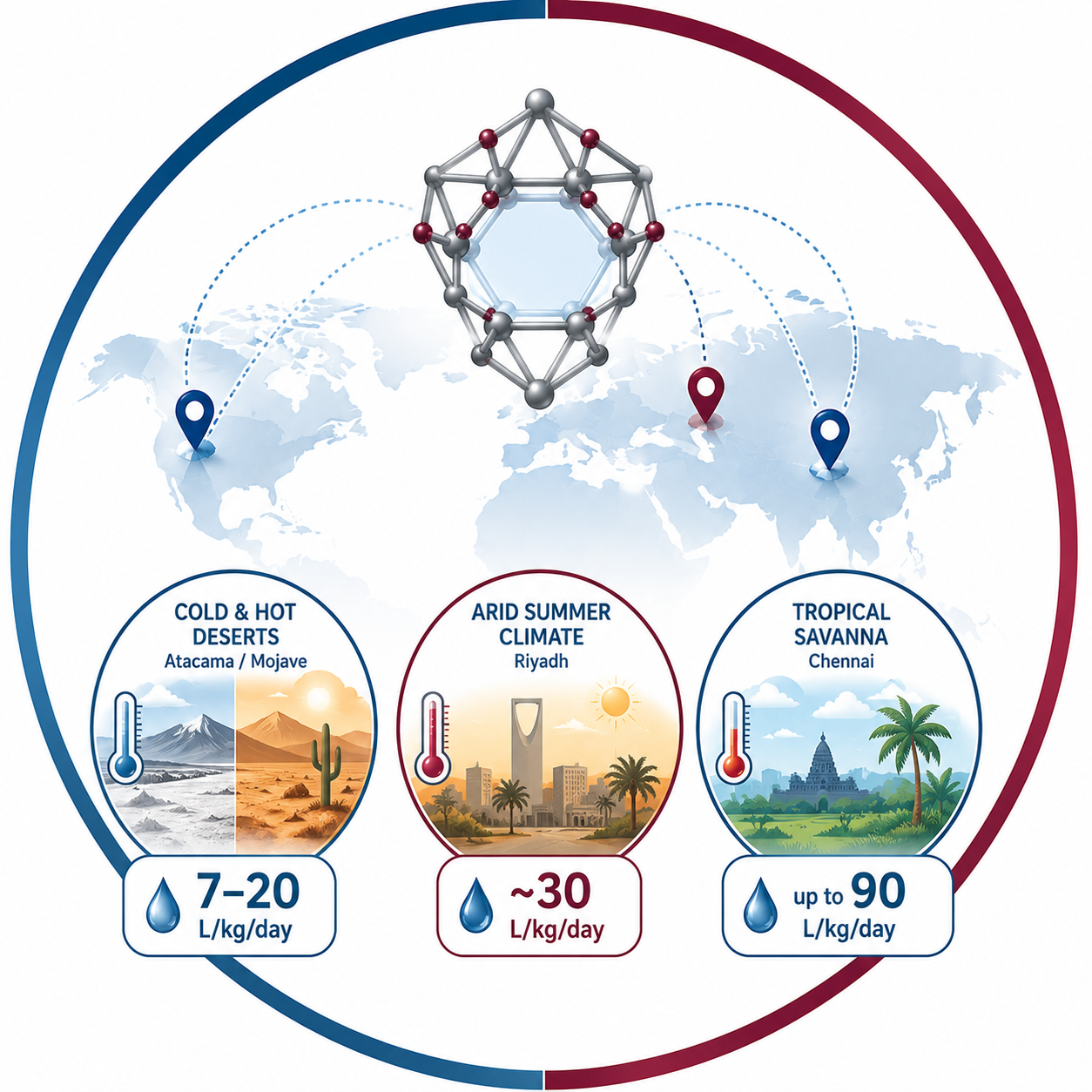
Rapid Cycling and Global Climate Adaptability with MOF-303
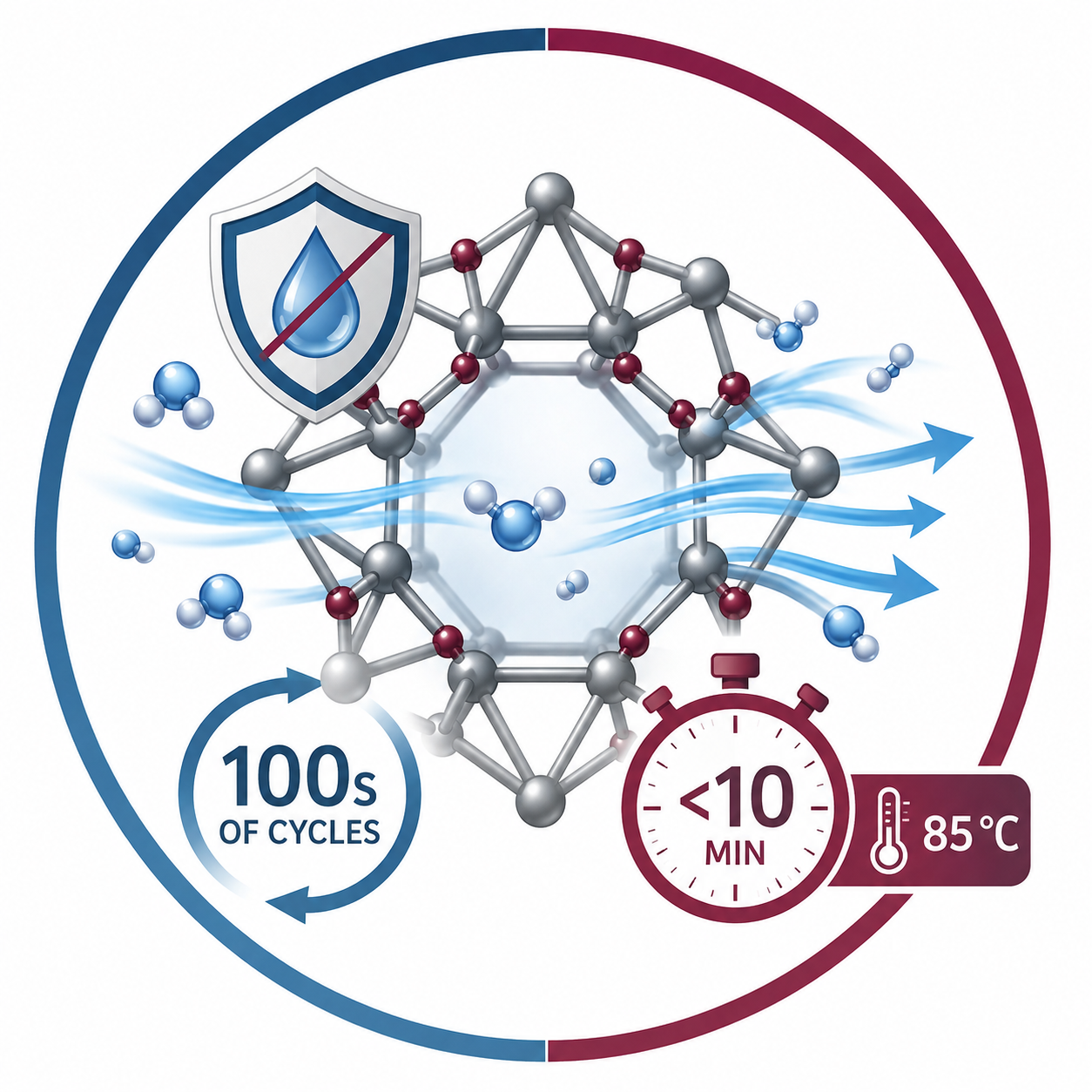
To overcome thermal conduction and mass-transport limitations in static beds, researchers introduced MOF-303 [Al(OH)(1H-pyrazole-3,5-dicarboxylate)], an aluminum-based framework featuring 1D pore channels and rod SBUs.
Advanced Porous Materials by MERYT Catalysts & Innovation
At MERYT Catalysts & Innovation, we supply high-performance Metal–Organic Frameworks and advanced porous materials designed to meet stringent crystallinity, purity, and surface-area standards. Selecting the optimal material is essential to ensure reproducibility and long-term stability in advanced separation, catalysis, and other applications.