

PFAS (per- and polyfluoroalkyl substances) are among the most persistent and difficult-to-remove contaminants in aquatic systems. Their high chemical stability, mobility, and the simultaneous presence of compounds with different chain lengths make their removal particularly challenging.
Recent research on functionalized MOF-808 proposes a different strategy: rather than simply capturing each contaminant independently, it takes advantage of interactions between them to increase overall adsorption capacity.
The result is a mechanism known as entrainment co-adsorption, opening an interesting pathway toward more selective, reusable adsorbents designed for continuous water-treatment systems.
Within the PFAS family, perfluoroalkyl carboxylic acids (PFCAs) can have different chain lengths. This difference is important because not all PFCAs interact with an adsorbent in the same way.
Long-chain compounds initially show greater affinity for certain hydrophobic surfaces, while short-chain compounds can have greater mobility within the pores. In a conventional adsorbent, these differences can lead to competition between contaminants and limit the efficient use of the available space.
The MOF-808 strategy proposes precisely the opposite: turning this molecular diversity into an advantage.
The study developed different zirconium-based MOF-808 variants, modifying both the modulators and ligand composition:
These chemical modifications allow the density of active sites, hydrophobicity, and affinity of the material toward PFCAs of different chain lengths to be tuned.
MOF-808-TFA performs especially well for short-chain PFCAs, while F-MOF-808-AA shows particularly favorable behavior toward long-chain compounds and multicomponent mixtures.
One of the most interesting aspects of the research is that adsorption does not occur through a single mechanism, but rather through a sequence of processes.
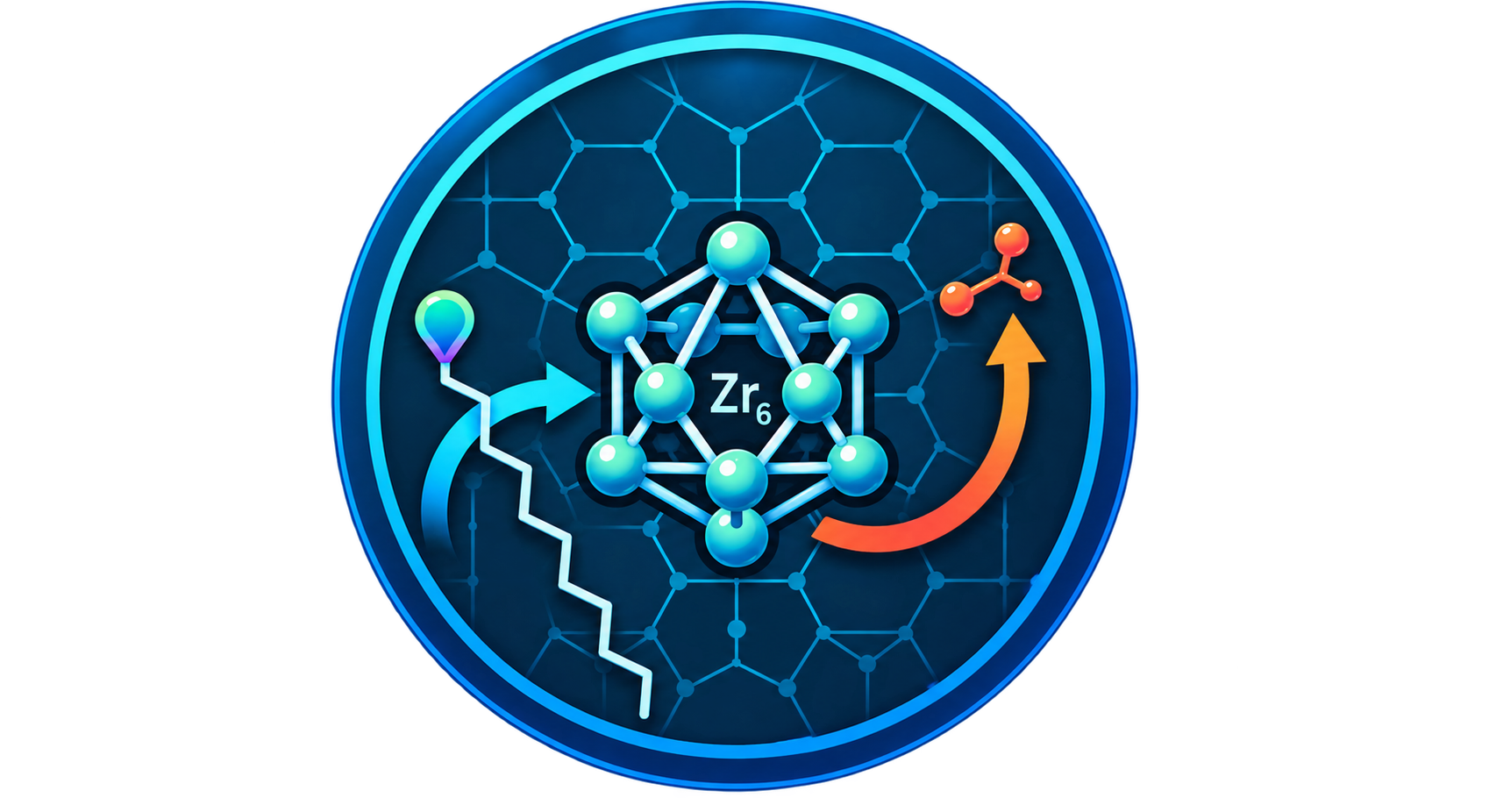
Short-chain PFCAs have greater mobility and can diffuse more easily through the porous structure. This leads to a dynamic reorganization of previously adsorbed molecules. In other words, the MOF does not simply behave as a collection of independent “empty spaces” that become progressively filled. Adsorbed molecules can reorganize and modify the conditions for the adsorption of subsequent molecules.

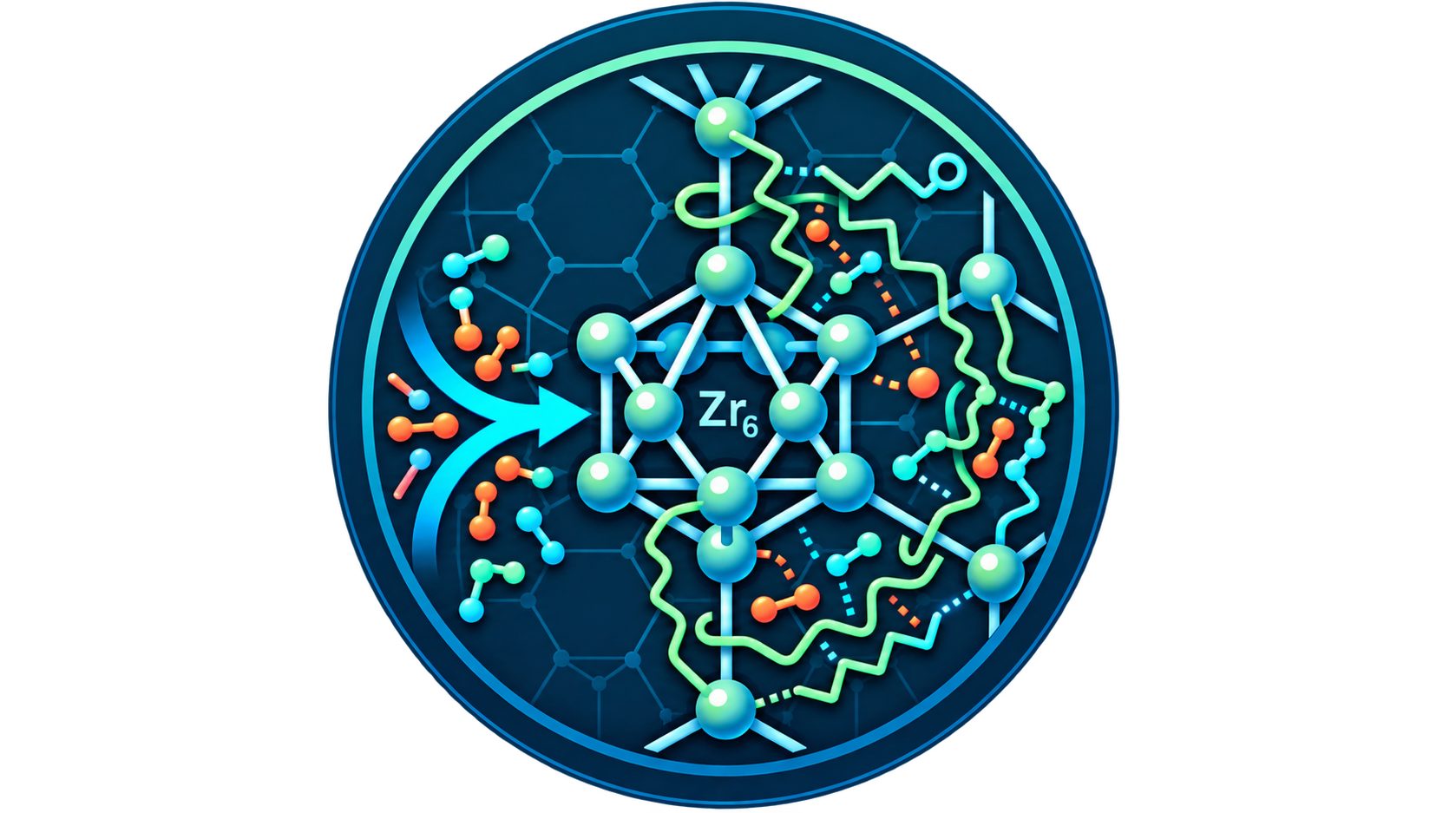
As the zirconium coordination sites become saturated, additional PFCA molecules can be retained through secondary interactions. This is where the concept of entrainment comes into play: previously adsorbed long-chain molecules create a fluorophobic and hydrophobic environment that favors the incorporation of other molecules, including short-chain PFCAs. F···F interactions and hydrophobic interactions help stabilize these additional molecules within the pores. In this way, long-chain molecules can act as “molecular anchors” that help retain shorter chains. The result is a cooperative adsorption process that makes more efficient use of pore space that would otherwise remain underutilized in a conventional system.
One of the challenges of using MOFs in powder form is their hydrodynamic behavior. Very fine particles can cause:
For this reason, the study incorporates a wet-granulation step, using poly(ethylene-co-vinyl alcohol) as the binder. The powder is therefore transformed into granules of different sizes suitable for use in packed-bed reactors.
This leads to a particularly significant result:
| Material | Powder capacity | Granulated capacity | Retention |
|---|---|---|---|
| MOF-808-AA | 2.395 mmol g⁻¹ | 1.621 mmol g–¹ | 67.7% |
| MOF-808-TFA | 2.239 mmol g⁻¹ | 1.886 mmol g–¹ | 84.2% |
| F-MOF-808-AA | 2.905 mmol g⁻¹ | 2.737 mmol g–¹ | 94.2% |
F-MOF-808-AA therefore shows the highest retention of adsorption capacity after processing. From an engineering perspective, this is important: the structural modifications not only enhance adsorption but also help the material withstand the transition from powder to a processable form.
The next step is even more important: determining whether the material performs when water continuously flows through a column.
In tests using granulated F-MOF-808-AA, the material maintained highly stable PFCA removal over 14,400 bed volumes, with removal levels in the range of 80–100% and no significant breakthrough observed during the reported test.
The effluent concentration remained at approximately 0.2 µg L-1 for the PFCAs evaluated, with particularly favorable performance for long-chain compounds.
This demonstrates the difference between simply developing a material with high adsorption capacity and developing an adsorbent capable of becoming a continuous water-treatment technology.
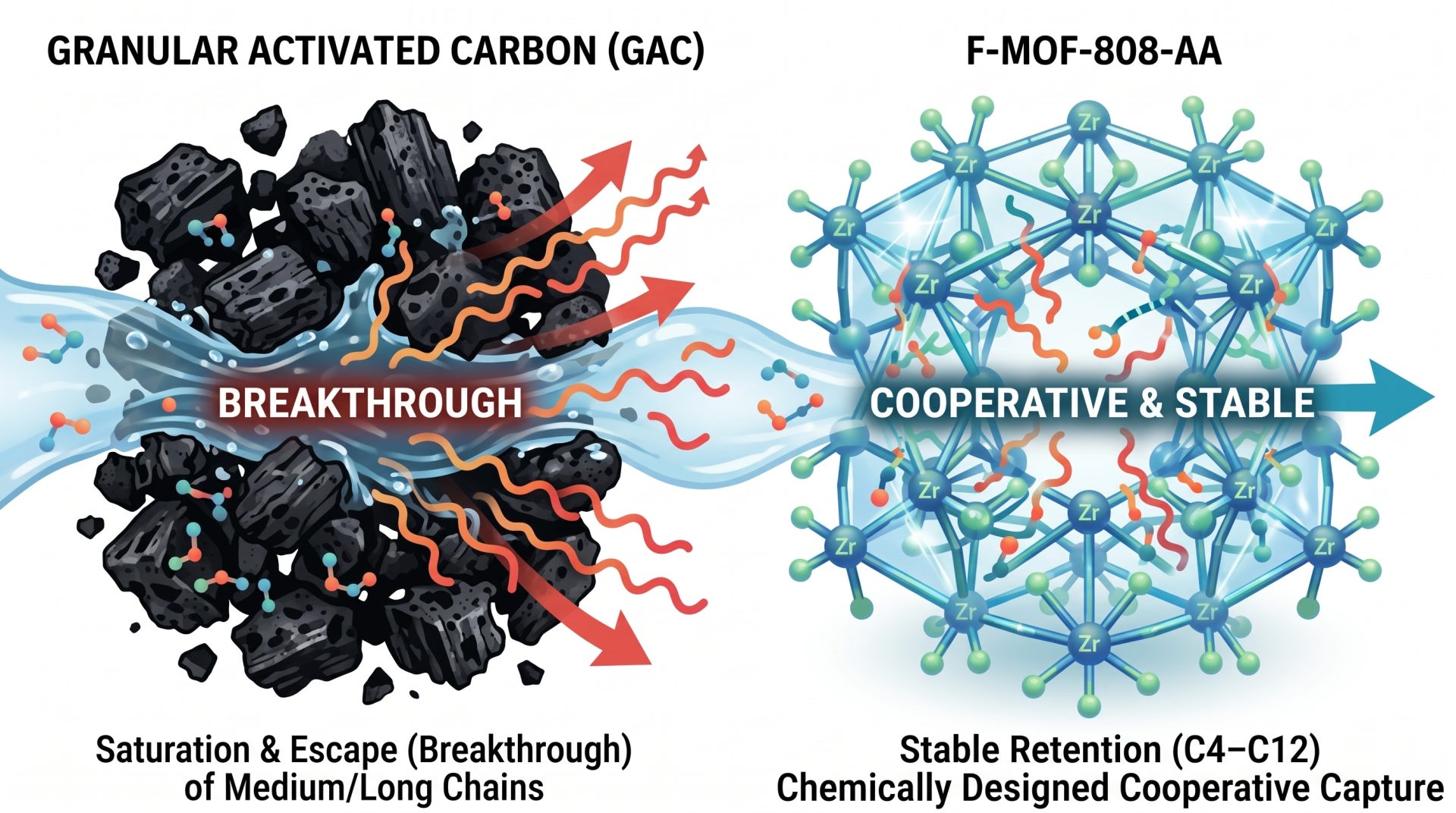
Granular activated carbon remains one of the reference technologies for removing organic contaminants. In comparative tests, GAC showed good initial performance, particularly for short-chain PFCAs. However, as the treated water volume increased, important differences emerged. F-MOF-808-AA showed more stable retention across the C4–C12 range, while activated carbon exhibited more pronounced breakthrough for certain medium- and long-chain compounds at higher bed volumes.
This highlights one of the main conceptual advantages of the new strategy: It is not simply about having more surface area, but about chemically designing the adsorbent so that PFAS molecules can cooperate during capture.
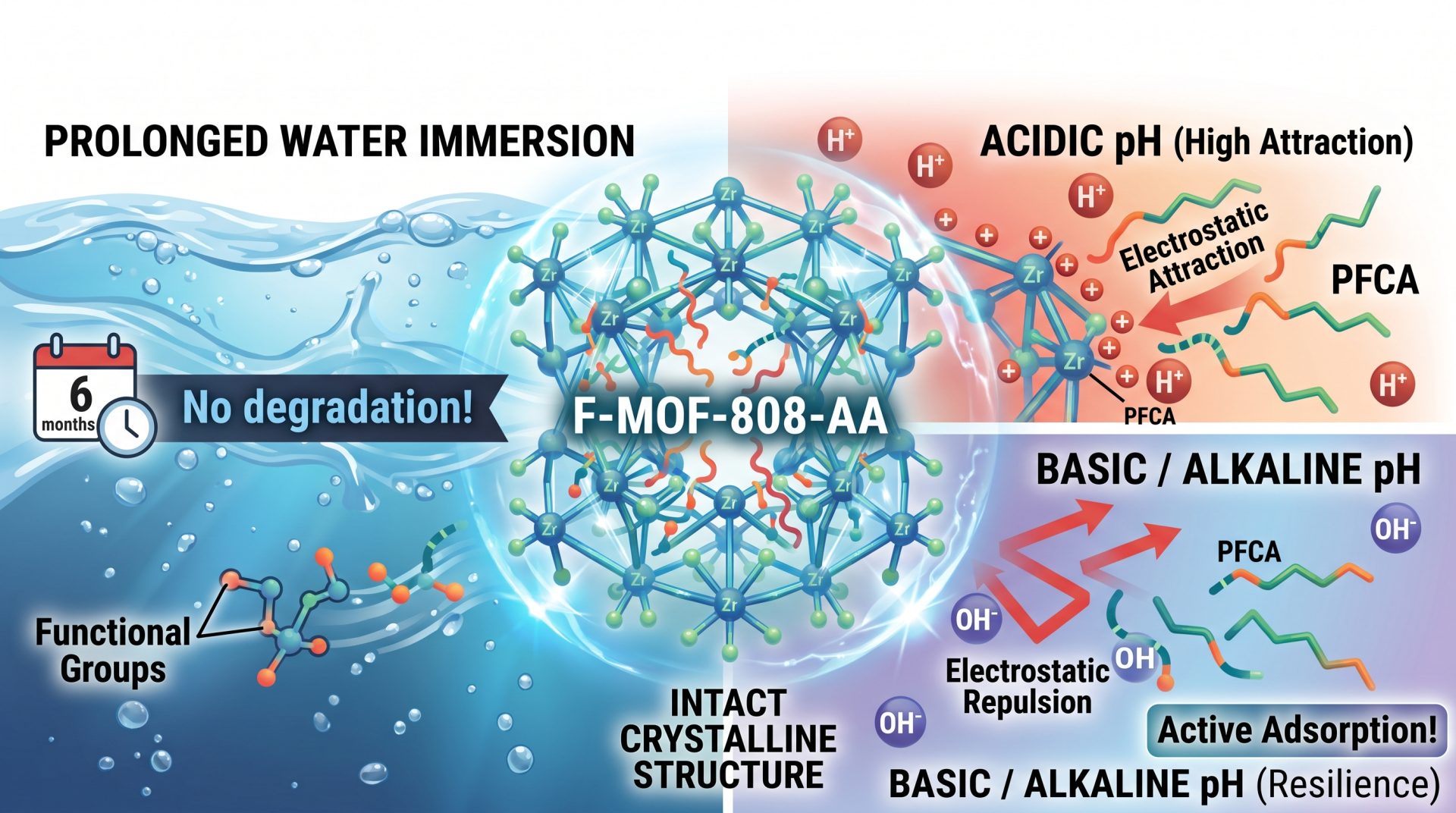
Another key consideration for any material intended for water treatment is stability. The MOFs studied maintained their crystalline structure and functional groups after prolonged exposure to water, including immersion tests of up to six months. They also showed good stability across pH variations, maintaining their structural integrity even under strongly basic conditions. Adsorption does vary with pH: under more acidic conditions, the surface favors electrostatic attraction of anionic PFCAs, while under basic conditions electrostatic repulsion increases. However, the fact that significant adsorption is maintained even under alkaline conditions indicates that electrostatic interactions are not the only driving force behind the process.
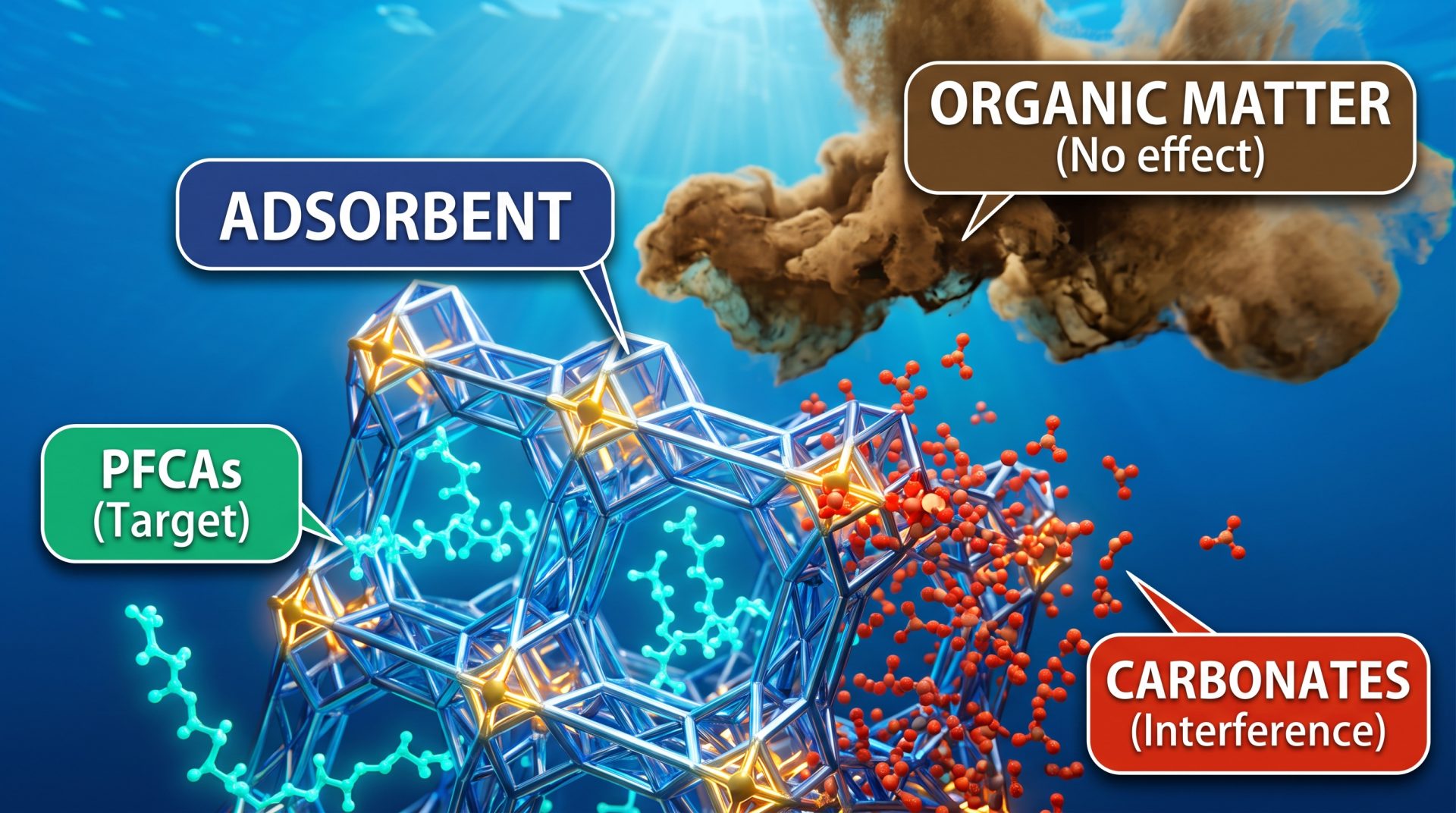
The research is also relevant because it does not only examine adsorbent performance in ideal water. The presence of natural organic matter, such as humic acids, had a relatively limited effect on PFCA capture under the conditions studied.
Carbonates, on the other hand, can be much more problematic because they have a strong affinity for zirconium nodes and can also increase the pH of the medium.
This highlights an essential consideration in the development of advanced adsorbents: chemical selectivity must be designed not only around the target contaminant, but also around the other components present in real water.
The main innovation is not simply the development of a MOF with a high specific surface area, but rather a different way of understanding adsorption. Instead of focusing solely on increasing the number of pores and active sites, the concept of entrainment co-adsorption raises a different question:
What if contaminant molecules themselves could help capture other contaminant molecules?
In MOF-808, long-chain PFCAs can create a favorable environment within the pores that subsequently facilitates the incorporation of shorter chains. The combination of metal-node coordination, hydrophobic interactions, and F···F interactions allows the available space to be used more efficiently and improves the capture of PFAS mixtures. This type of advance reflects the direction in which next-generation adsorbent materials are evolving not simply materials with higher capacity, but materials specifically designed to interact with each contaminant and adapt to process requirements.
At MERYT Catalysts & Innovation, we support this vision through our new MOF catalogue, featuring different Metal-Organic Framework solutions for adsorption, separation, and purification applications. This platform of advanced materials opens new opportunities for developing more efficient, selective processes tailored to complex challenges such as PFAS removal.