
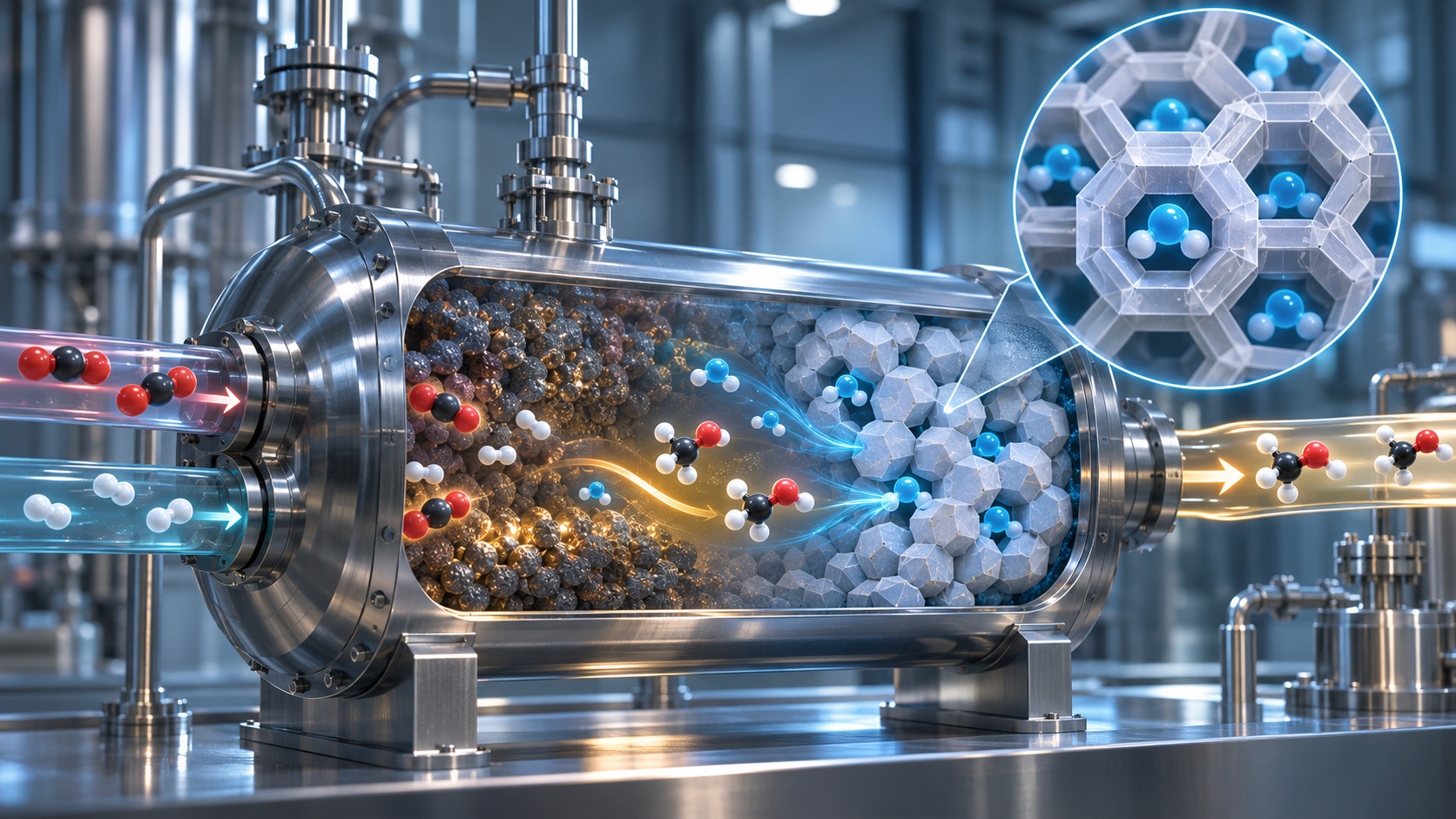
The conversion of carbon dioxide (CO₂) into value-added products is one of the research pathways being explored to advance towards more sustainable industrial processes. Among the different alternatives, the hydrogenation of CO₂ to produce methanol is particularly interesting due to the versatility of this compound, which can be used as a fuel, a chemical feedstock, and a precursor for the production of longer-chain hydrocarbons. Methanol can also be incorporated into conventional fuel blends.
This is an exothermic reaction, with a standard reaction enthalpy of −49.16 kJ/mol. However, its yield is constrained by chemical equilibrium. In particular, the water generated during the reaction can limit further methanol formation, highlighting the need to develop strategies capable of modifying reaction conditions and promoting the production of the desired compound.
In this context, the study “LTA and FAU zeolites as water and CO₂ sorbents for sorption-enhanced CO₂ hydrogenation (SECO₂H): Low-pressure sorption-enhanced methanol synthesis as a case study”, published in the journal Process Safety and Environmental Protection, investigates a process intensification strategy based on the selective removal of water during the reaction itself.
The research, conducted by the Catalysis and Reactor Engineering Group (CREG) at the Aragón Institute of Engineering Research (I3A), University of Zaragoza, examines how the structural characteristics and adsorption properties of different zeolites influence the performance of methanol synthesis from CO₂.
The strategy investigated is known as Sorption-Enhanced Reaction (SER). Its principle involves incorporating a solid adsorbent directly into the reactor so that it can selectively remove one of the products generated during the reaction.
In the case of CO₂ hydrogenation to methanol, the objective is to capture water as it is formed. By reducing its concentration in the reaction environment, the equilibrium is shifted towards the products, increasing methanol formation compared with a conventional catalytic process in which water remains in the system.
This approach integrates two functions within the same reaction environment: the catalytic conversion of CO₂ and the selective separation of one of the products. Therefore, the choice of adsorbent is a determining factor. It is not sufficient to select a material with a high adsorption capacity; it must also exhibit an affinity for water over CO₂ and avoid negatively interfering with methanol formation or stability.
The study specifically compares different zeolites to identify which properties enable more effective process intensification.
Zeolites are crystalline microporous materials whose structures consist of a three-dimensional network of silicon and aluminium tetrahedra linked by oxygen atoms. Their composition, silicon-to-aluminium ratio, cations and pore dimensions determine their adsorption and molecular separation properties.
These characteristics make zeolites interesting materials for processes that require discrimination between molecules of different sizes or chemical affinities.
The study investigated four zeolites belonging to two structural families:
The comparison made it possible to evaluate both the CO₂ and water adsorption capacities and the selectivity of each material under competitive adsorption conditions.
One of the most relevant aspects is the difference in pore aperture size. In particular, LTA-3A has an approximate pore aperture of 3 Å, smaller than the kinetic diameter of CO₂ (approximately 3.3 Å) and methanol (approximately 3.6 Å). This configuration considerably restricts the access of these molecules to the microporous structure, while allowing favourable water adsorption.
By contrast, zeolites with larger pore apertures offer different possibilities for interaction with the molecules present in the reaction medium. These structural differences are essential for understanding the results obtained during the catalytic tests.
Before evaluating the performance of the zeolites in the reaction, the researchers studied their CO2 and water adsorption and desorption properties. Techniques such as thermogravimetric analysis (TGA) and temperature-programmed desorption (TPD) were used to characterise molecular uptake and the conditions required for their release.
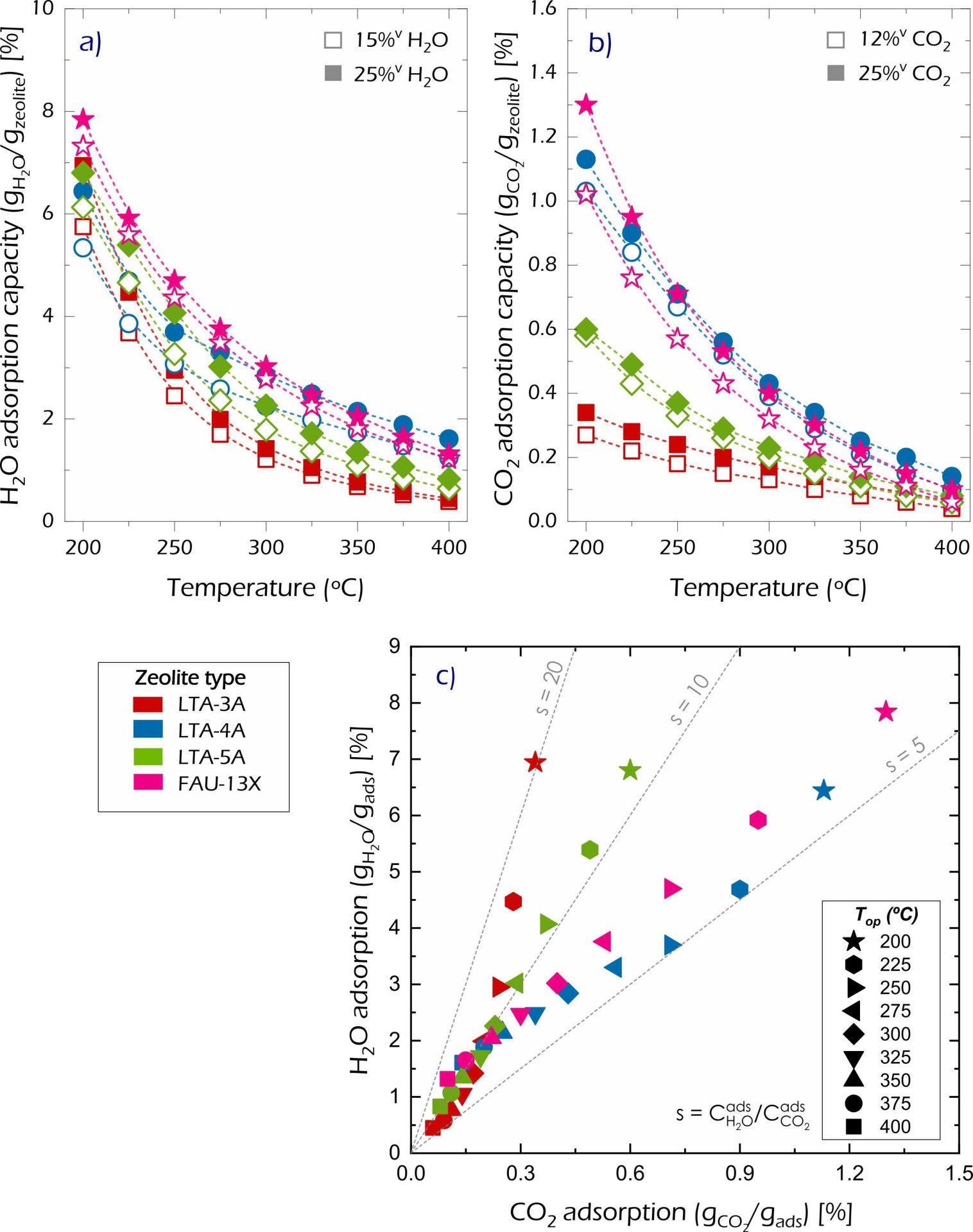
The results showed that FAU-13X has the highest overall adsorption capacities for both CO2 and water. However, a high adsorption capacity does not necessarily translate into better performance in a methanol synthesis intensification process.
LTA-3A stood out for its greater selectivity and affinity towards water, with considerably more limited CO2 adsorption. This difference is particularly important: shifting the reaction equilibrium requires removing the water generated without significantly capturing the CO2 that must continue reacting.
Once the adsorption properties had been characterised, the four zeolites were incorporated into CO₂ hydrogenation tests to evaluate their influence on methanol production.
The experiments were carried out using the commercial MET-951 catalyst, based on CuO–ZnO–Al₂O₃. Different operating conditions were analysed, including temperature and weight hourly space velocity (WHSV).
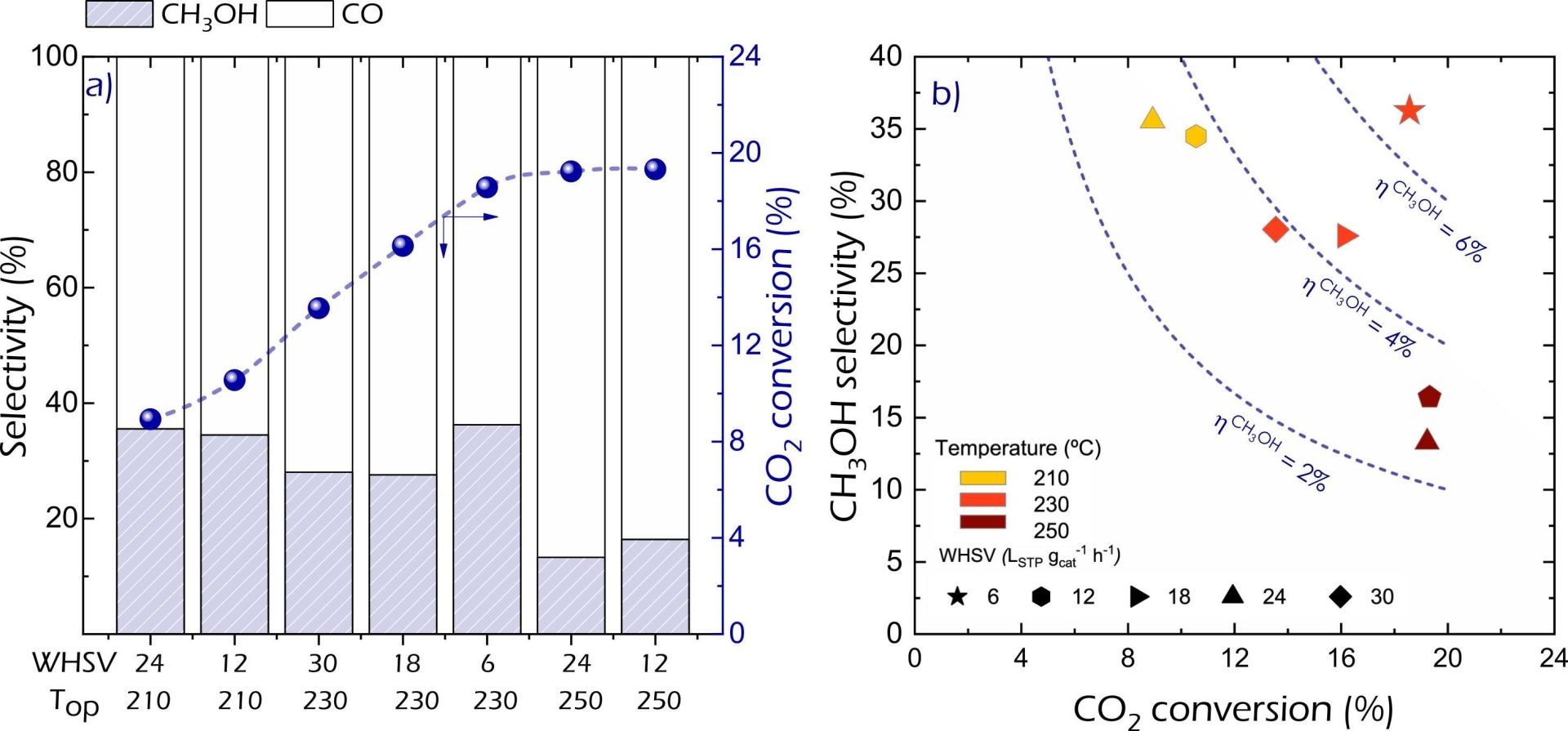
First, a reference was established through conventional catalytic tests, without incorporating the adsorption effect of the zeolites.
This result served as a reference for determining the effect of incorporating the different adsorbents into the reaction system.
Subsequently, sorption-enhanced reaction tests were carried out, maintaining the operating conditions at 230 °C and 20 atm.
Among the four materials evaluated, LTA-3A was the only zeolite that produced a pronounced intensification of the process, increasing both methanol yield and CO production. In particular, the incorporation of LTA-3A resulted in a methanol yield of 10%, compared with 6.8% obtained in the conventional catalytic reference process. This represents an approximate increase of 50% under the experimental conditions studied.
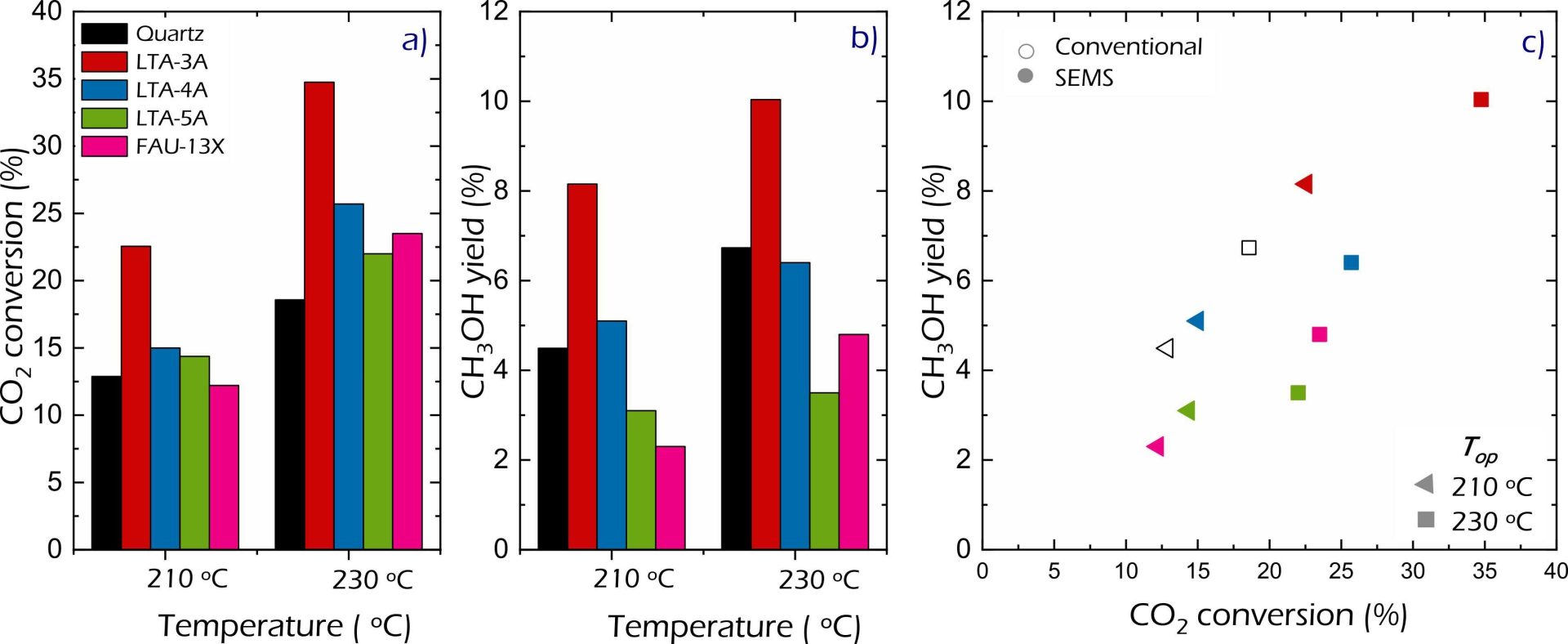
The comparison between the materials showed that structural differences can either promote or limit process intensification.
LTA-4A had a limited impact on methanol yield. In contrast, LTA-5A and FAU-13X resulted in lower yields compared with the conventional process.
The researchers associated this behaviour with the formation of dimethyl ether (DME) through methanol dehydration. This secondary reaction was favoured in materials with larger pore apertures, which allow greater access of methanol to acidic sites within the structure.
The tests recorded DME yields of approximately 0.9% at 210 °C and 2.5% at 230 °C. The formation of this secondary product helps explain why a higher overall adsorption capacity does not necessarily translate into a higher methanol yield.
In this regard, LTA-3A offers a particularly favourable combination: high selectivity towards water and a structure that restricts methanol interaction with sites where it could be converted into other products.
Another fundamental aspect of the study is the temporary nature of the intensification effect. The adsorption capacity of zeolites is limited. As the reaction proceeds, water accumulates in the adsorbent until saturation is reached. Once this occurs, the material progressively loses its ability to remove water from the reaction medium, and the system begins to behave similarly to a conventional catalytic process.
This phenomenon, known as breakthrough, determines how long the intensification effect can be maintained.
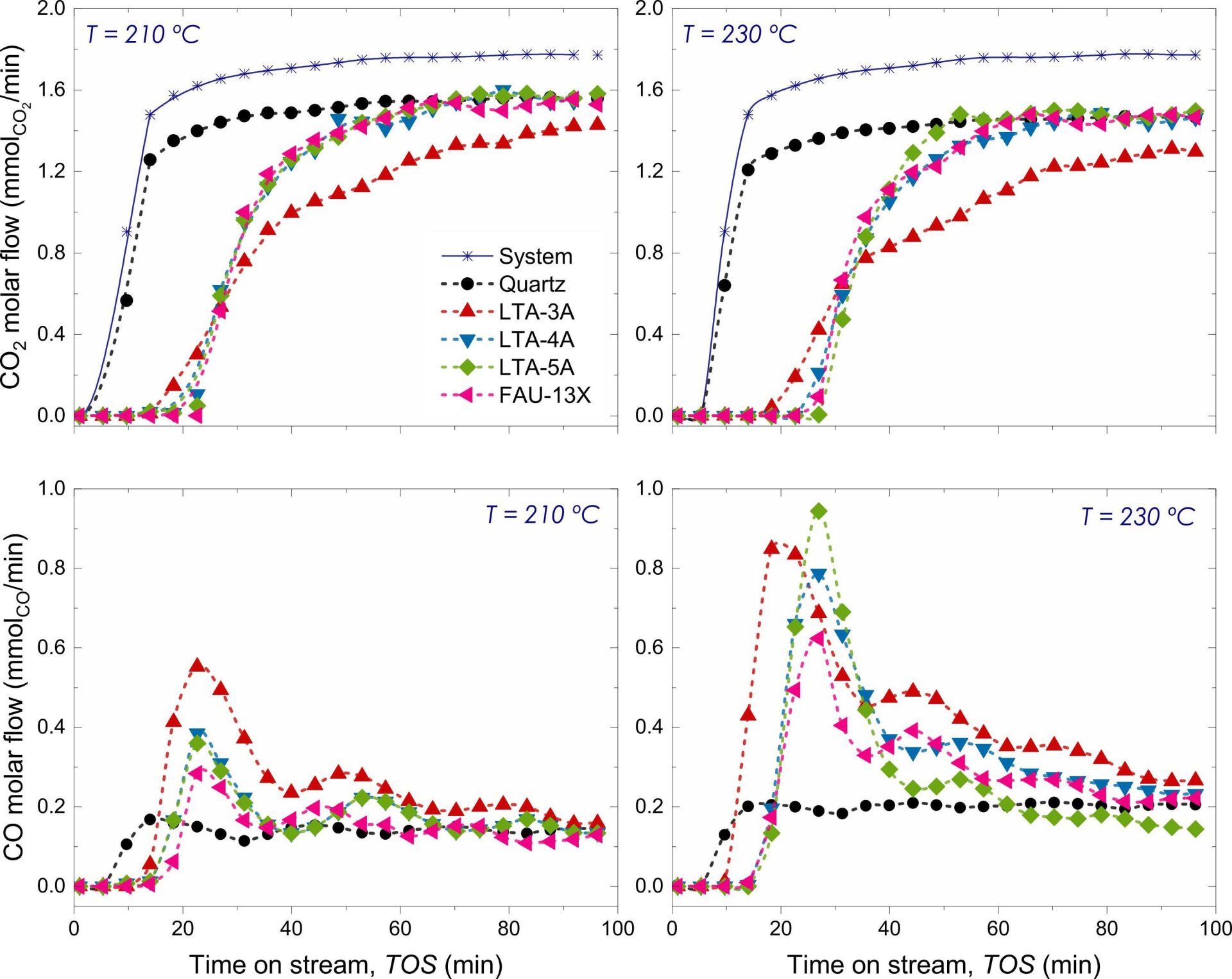
The results showed that the intensification period ranged approximately from 50 to 80 minutes, depending on the temperature and the type of zeolite. LTA-3A exhibited the longest intensification period, consistent with its greater selectivity towards water. During this stage, LTA-3A was estimated to remove approximately 15–40% more water than the other zeolites evaluated.
Once breakthrough occurs, the yield progressively approaches the behaviour of the conventional process. Therefore, the authors indicate that limiting operation to the period before adsorbent saturation could improve the average process yield.
Overall, the study's results show that selective water removal is a promising strategy for intensifying CO₂ hydrogenation to methanol.
The comparison of LTA and FAU zeolites demonstrates that maximum adsorption capacity alone is not the criterion that determines process performance. Selectivity towards water, molecular accessibility to the microporous structure and the ability to avoid secondary reactions are equally important factors.
LTA-3A stood out for its ability to combine preferential water adsorption with limited interaction with CO₂ and methanol. Under the conditions studied, this combination enabled an increase in methanol yield compared with the conventional catalytic reference process.
Within the framework of this research, MERYT Catalysts & Innovation supplied the commercial MET-951 catalyst, based on CuO–ZnO–Al₂O₃, used in the CO₂ hydrogenation to methanol experiments.
The study provides an example of collaboration between academic research and catalytic technology, in which the combined evaluation of catalysts and adsorbent materials enables further investigation into new strategies for chemical process intensification.