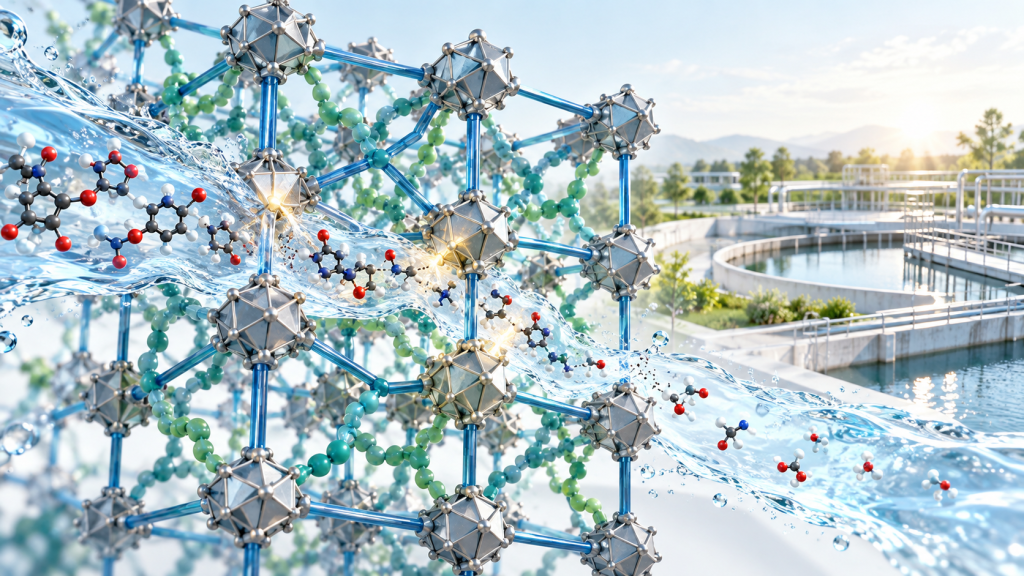
Removing a contaminant from water does not always mean destroying it. And this distinction is particularly important when dealing with persistent pesticides.
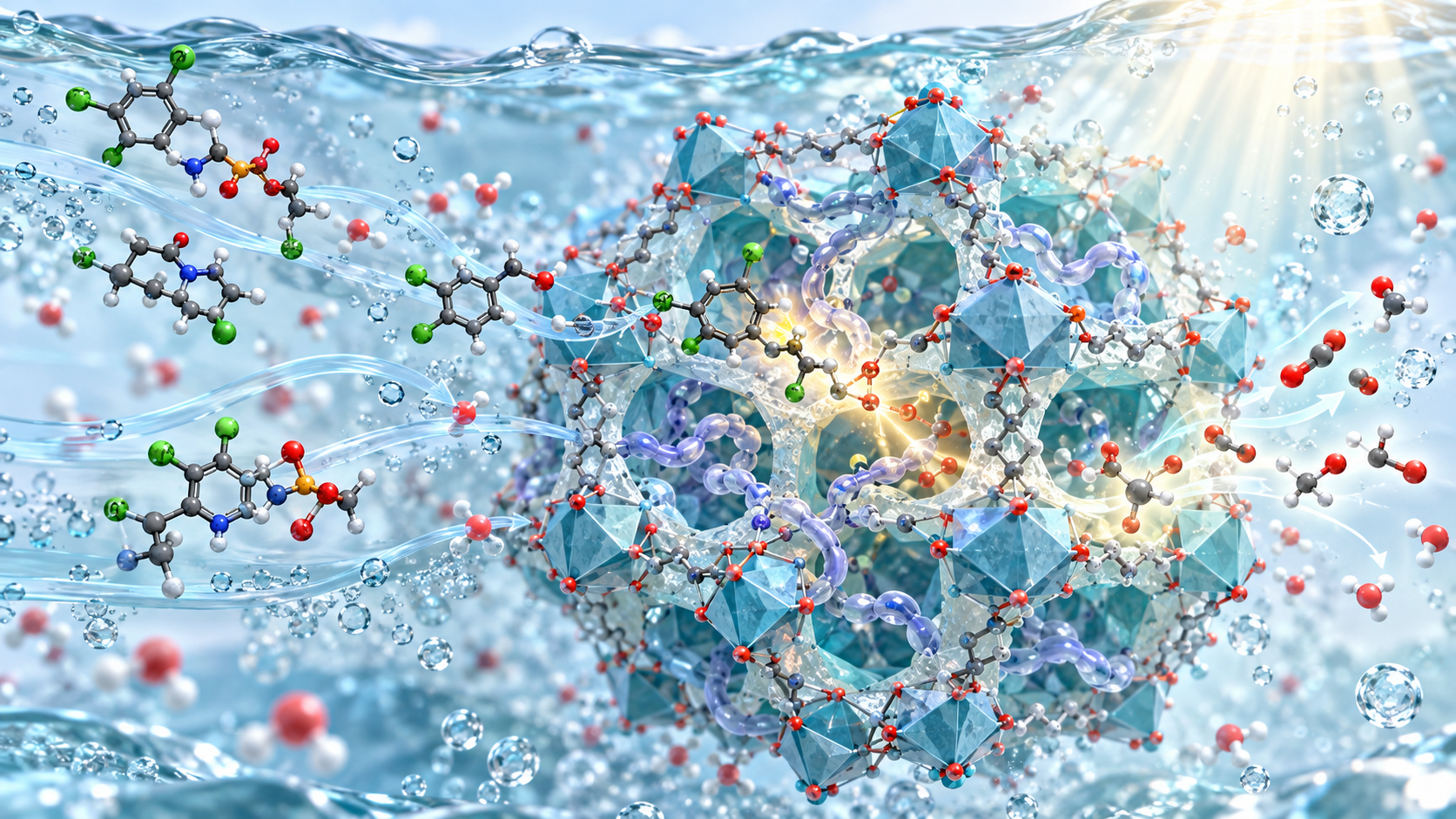
A team of researchers from the University of Granada, together with the University of Wroclaw, has just presented a strategy in ACS Applied Materials & Interfaces based on MOF–polymer hybrids capable of addressing one of the major challenges in the degradation of organophosphorus pesticides: ensuring that the transformation actually proceeds to products that are significantly less toxic.
The protagonist is fenamiphos, a persistent organophosphorus pesticide. The problem is that its oxidation does not necessarily mean detoxification. When fenamiphos is oxidized, it can be converted into fenamiphos sulfoxide (FSO), a compound that retains similar toxicity while also exhibiting greater solubility and mobility in water.
This is where the material developed by the team comes in.
The researchers start with NU-1000, a zirconium-based MOF known for its stability and photocatalytic properties. But they introduce a key modification: incorporating organic polymers within the porous structure of the MOF. Specifically, PMMA, poly(methyl methacrylate), and PDMAM, poly(2-dimethylaminoethyl methacrylate).
The idea is to modify the chemical microenvironment of the MOF without compromising its ability to absorb light and generate reactive species. The analyses show that the polymers grow around the cavities of NU-1000 while the crystalline structure of the MOF is preserved after modification.
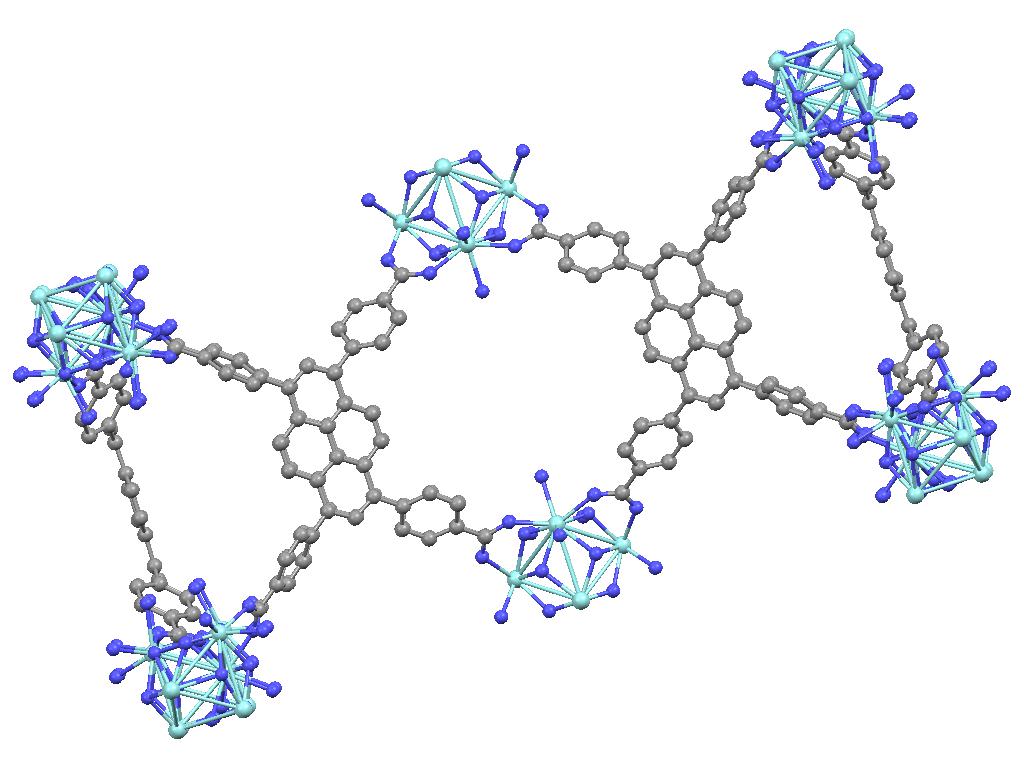
Zirconium-based MOF
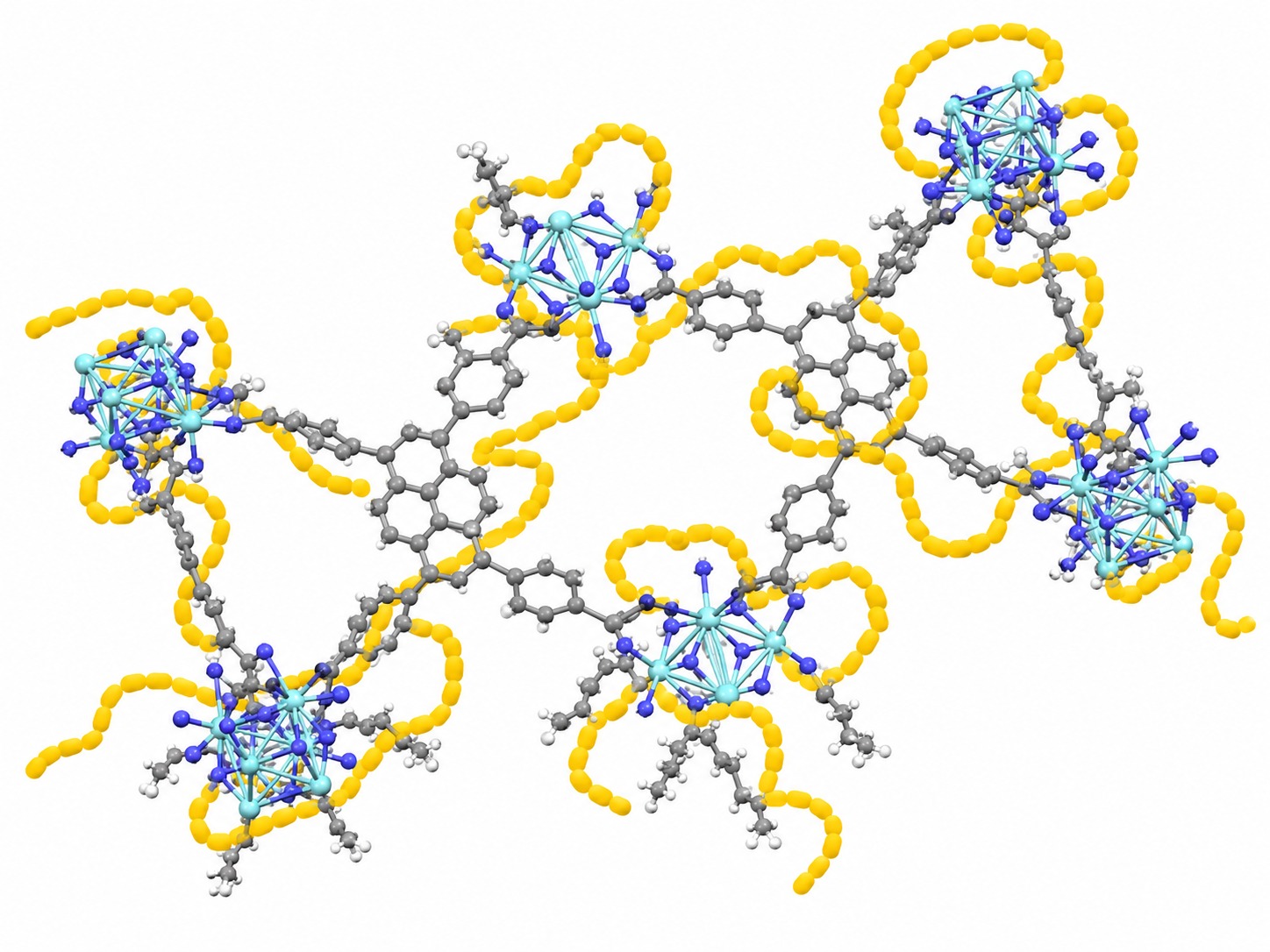
Poly(methyl methacrylate)
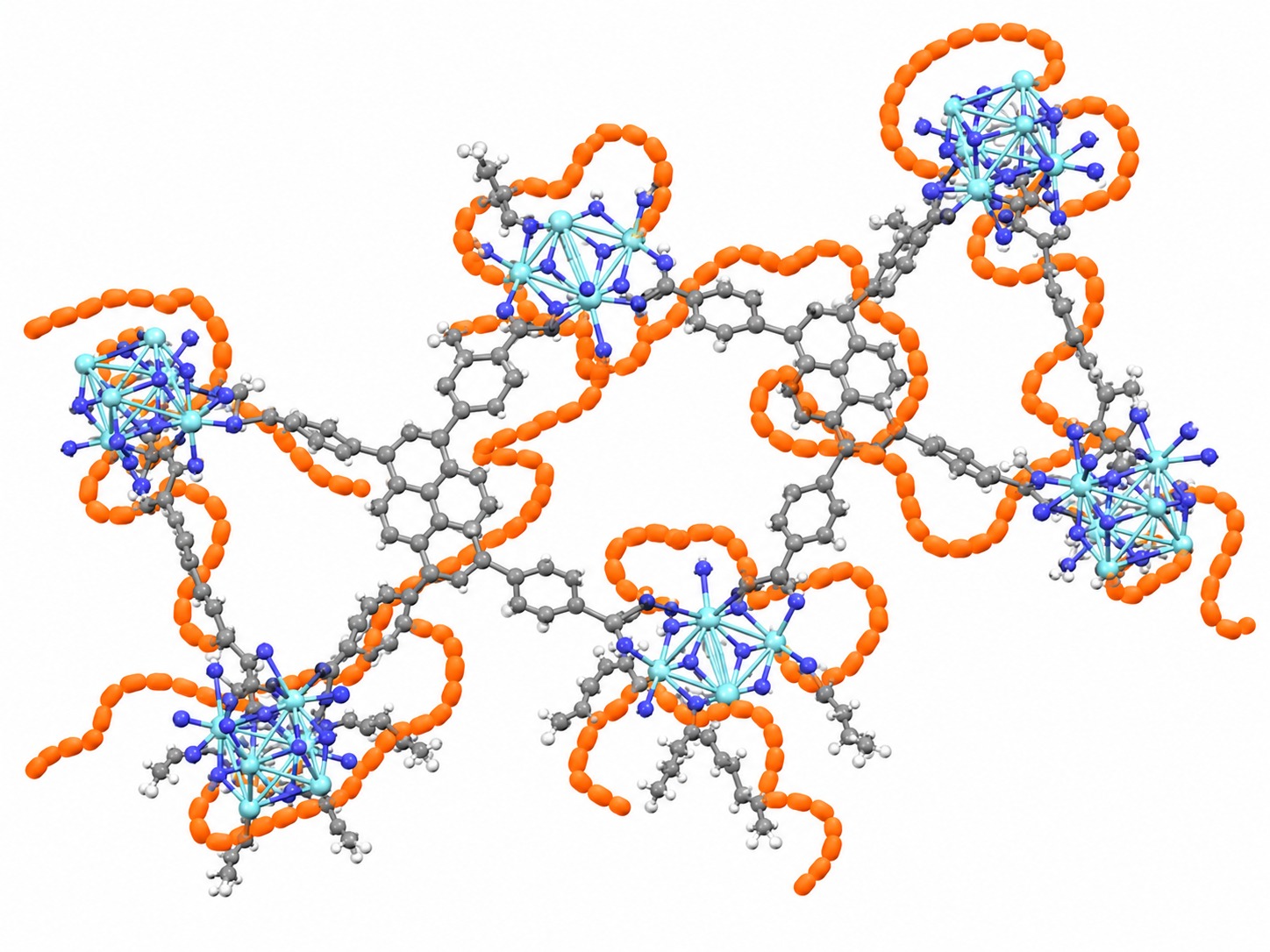
Poly(2-dimethylaminoethyl methacrylate)
The system operates through a photooxidation–hydrolysis sequence:
NU-1000 uses visible light to oxidize fenamiphos and rapidly convert it into FSO.
The FSO then undergoes hydrolysis, yielding products with lower toxicity.
Persistent organophosphorus pesticide
Visible light / photooxidation
Persistent organophosphorus pesticide
Hydrolysis
This second reaction is precisely where unmodified NU-1000 encounters difficulties.
Under acidic conditions, the original MOF can completely oxidize fenamiphos in just 10 minutes, but it cannot effectively hydrolyze the pesticide into low-toxicity products.
The MOF–polymer hybrids change this behavior.
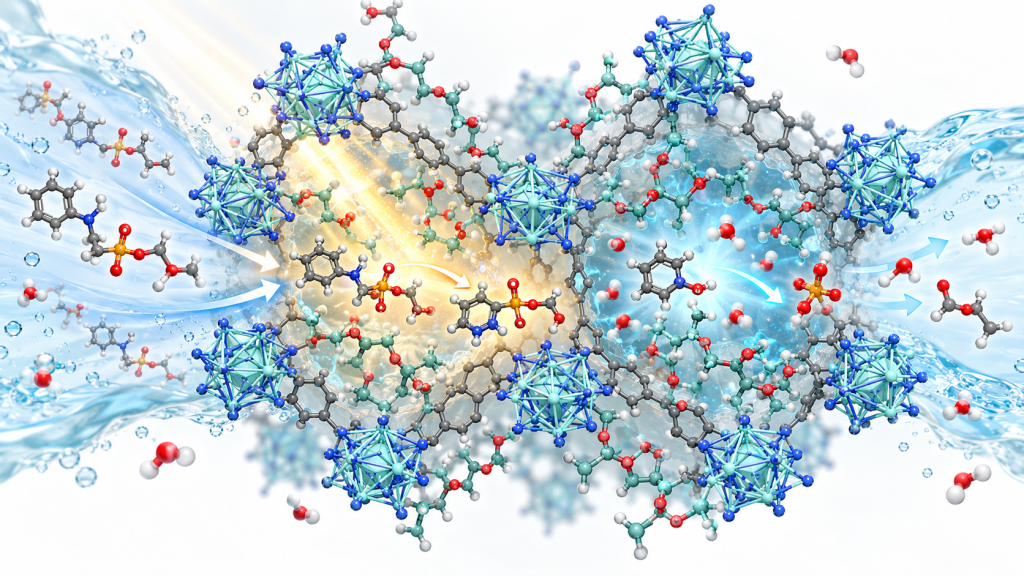
The incorporation of the polymers introduces functional groups capable of modifying the local chemistry around the zirconium centers.
Retains the MOF's photocatalytic activity
Increases basicity and promotes hydrolysis
The effect is particularly interesting in the case of PDMAM, which provides tertiary amine groups and significantly increases the basicity of the material. In this way, the system can retain the MOF’s photocatalytic activity while simultaneously promoting the hydrolysis of the oxidized product.
The result is a genuine cascade process:
And all of this takes place under unbuffered, mildly acidic aqueous conditions, around pH 4.7–6.4, which are much closer to environmental conditions than the strongly basic conditions that normally favor the hydrolysis of organophosphorus compounds using Zr-MOFs.
In addition, the material could be reused over several cycles, reaching a cumulative TON of 2.29 after three cycles, although the authors observed a loss of activity during the third cycle, due to interactions between phosphate-containing products and the zirconium centers.
The most relevant aspect of this work is not the specific pesticide studied. It is the concept.
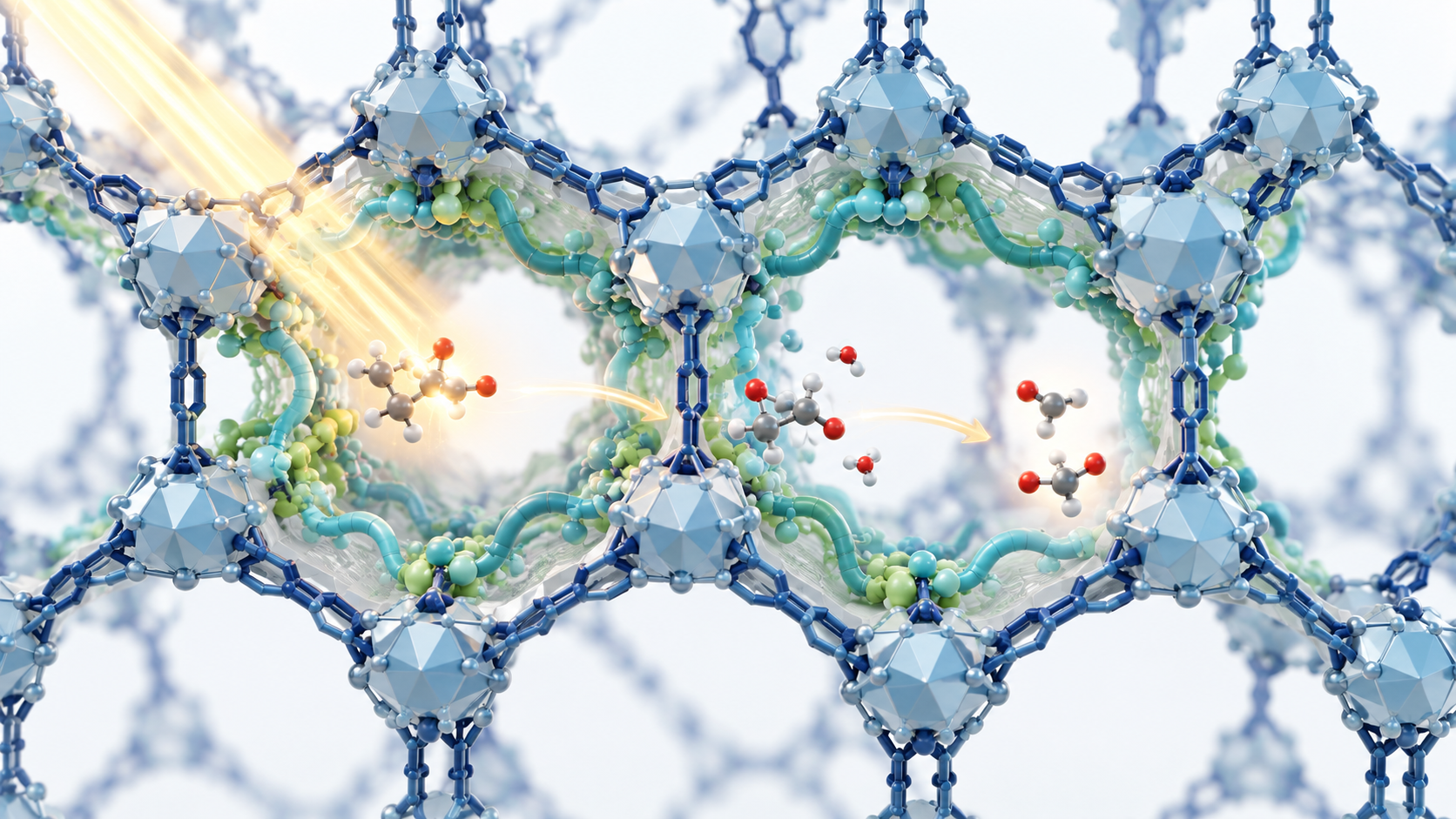
MOFs make it possible to design materials with extraordinary structural precision. Polymers, in turn, can introduce new chemical functionalities. Combining the two makes it possible to create a tailored catalytic microenvironment.
The result is a hybrid material capable of conducting two consecutive transformations that the original MOF could not efficiently perform under the same conditions.
This is still a laboratory-scale study, and important questions need to be addressed before considering large-scale applications: long-term stability, reusability, performance in real water matrices, scalability, and the treatment of complex mixtures of contaminants.
But the work points toward a particularly interesting direction: designing materials not simply to capture contaminants, but to chemically transform persistent molecules into less problematic products.
And doing so with hybrid materials whose chemistry can be tuned at the molecular scale could open up new possibilities for the design of advanced water decontamination technologies.