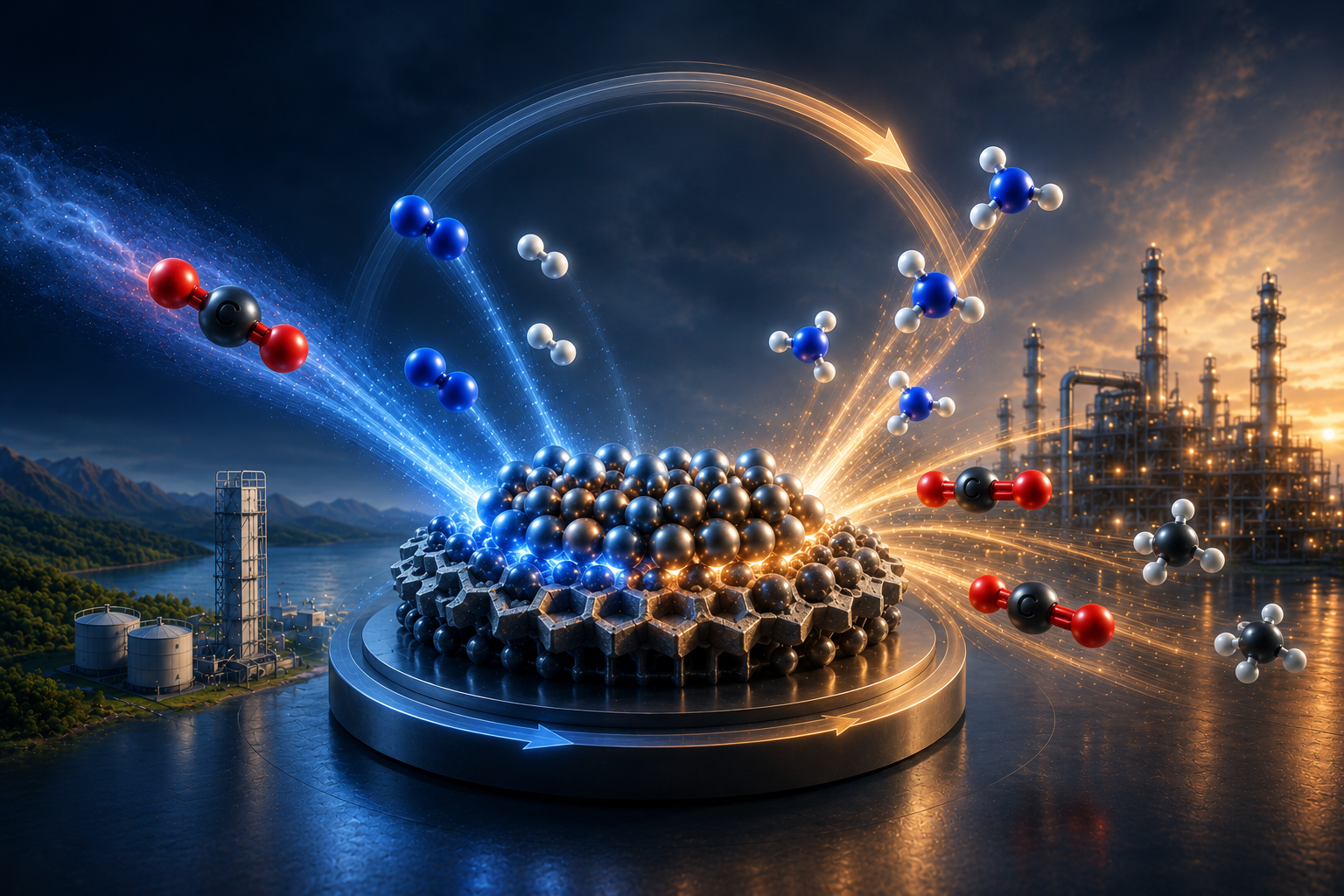
Ammonia synthesis is one of the world’s most important industrial processes. It underpins the production of fertilizers, numerous chemical products, and is increasingly being considered an energy carrier for a decarbonized economy. However, the process that has dominated the industry for more than a century, the Haber-Bosch process, still relies on extreme pressure and temperature conditions, resulting in high energy consumption and a significant carbon footprint.
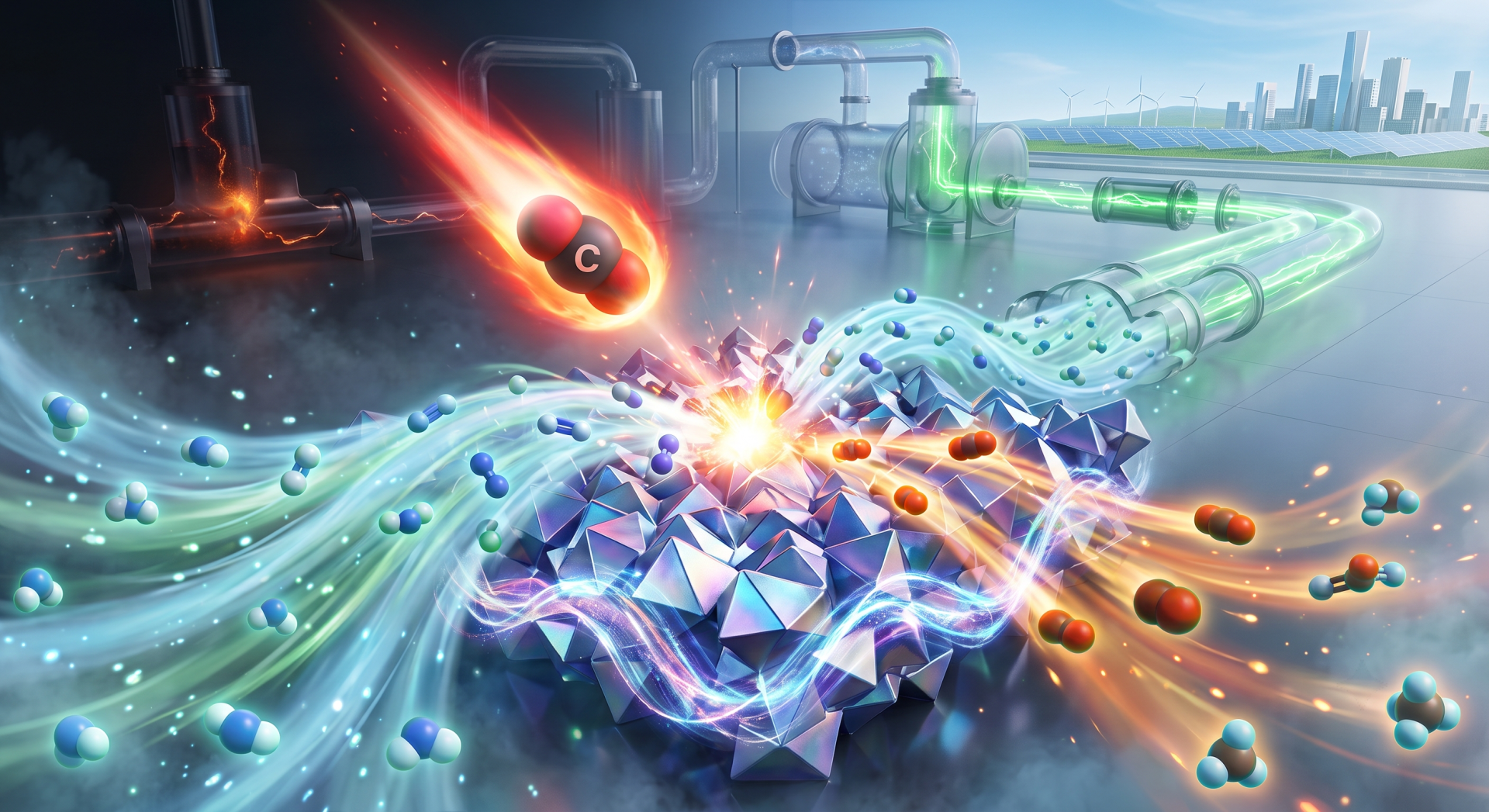
A recently published study proposes a radically different approach: using CO2 as a chemical trigger to produce ammonia at atmospheric pressure through a chemical looping process, while simultaneously converting part of the carbon dioxide into valuable chemical products.
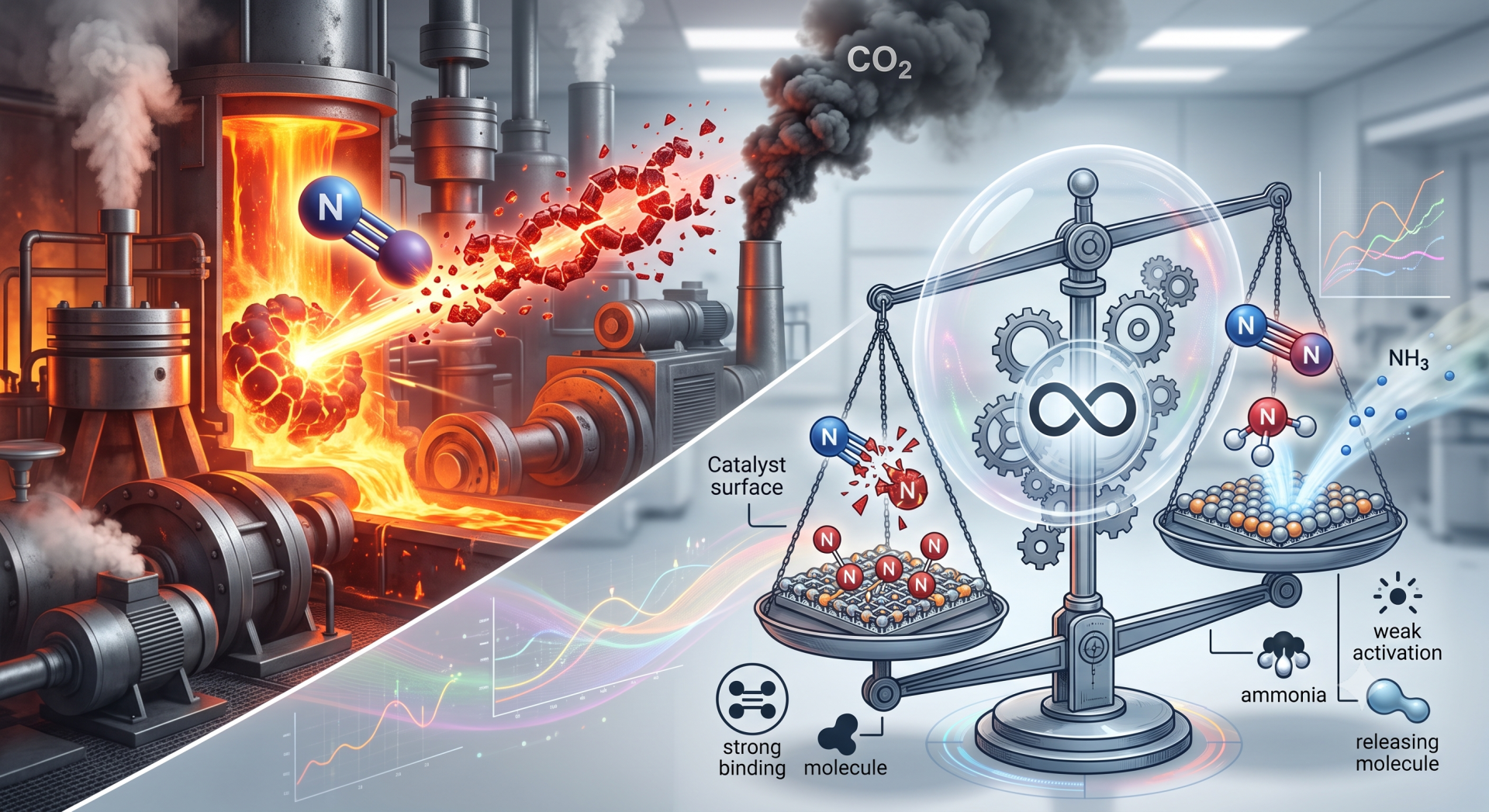
On paper, the reaction between nitrogen and hydrogen appears straightforward. Breaking the triple bond of molecular nitrogen requires an enormous amount of energy. As a result, industrial ammonia production typically operates at 400–500 °C and 10–30 MPa, conditions responsible for approximately 1.3% of global CO2 emissions.
For decades, the development of improved catalysts has been constrained by a fundamental limitation: the better a material activates nitrogen, the more difficult it becomes to release the ammonia that is subsequently formed. This trade-off, known as the scaling relationship, has long limited significant improvements in catalytic efficiency.
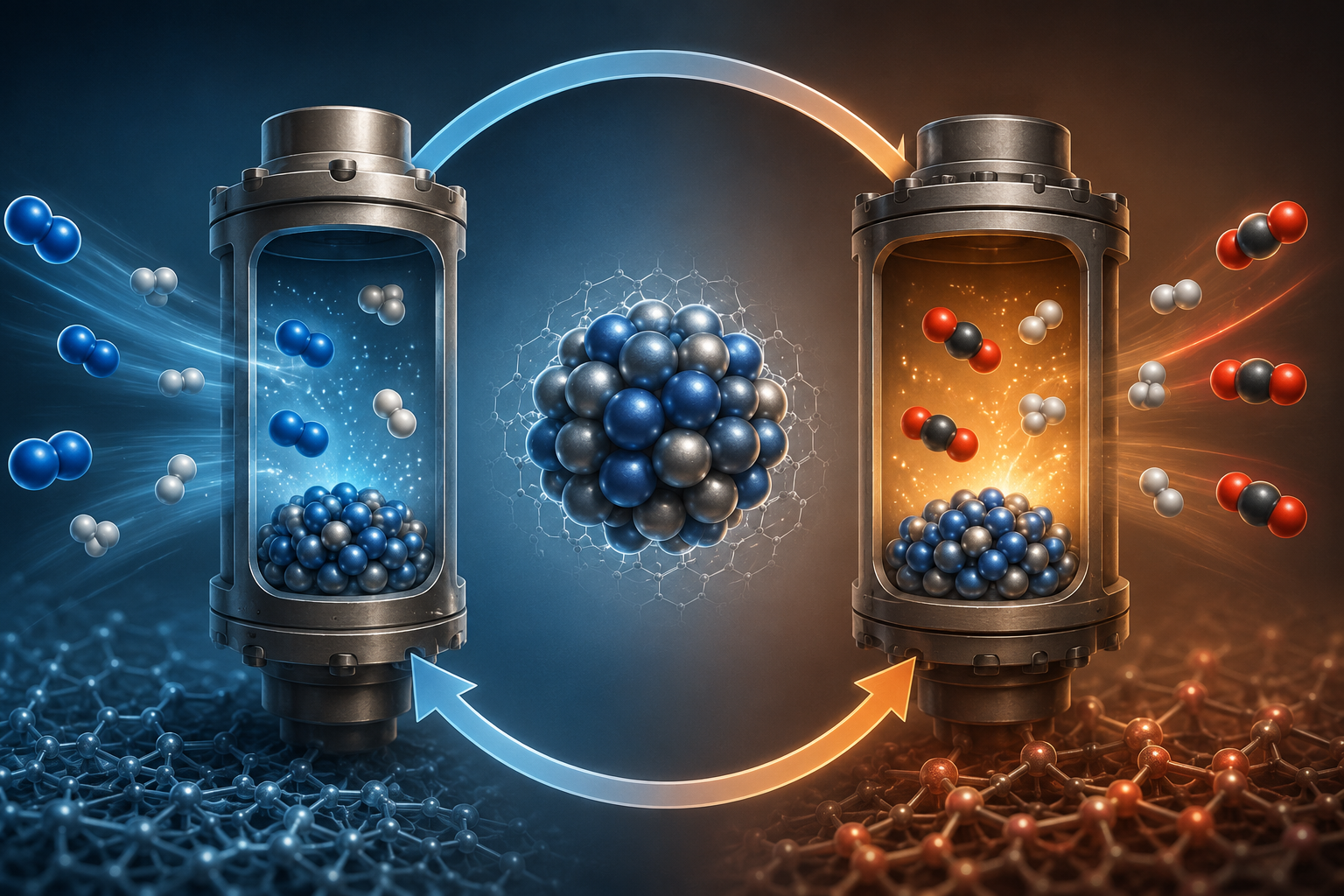
The new study departs from the conventional route by employing a chemical looping ammonia synthesis (CLAS) process based on a nitrogen carrier composed of the bimetallic nitride Co3Mo3N.
Rather than carrying out the entire reaction simultaneously, the process alternates between two distinct stages:
The key innovation is that CO2 no longer behaves as an inert gas or merely a by-product. Instead, it plays an active role within the catalytic mechanism.
When CO2 meets the surface of the cobalt-molybdenum nitride, it induces a controlled surface oxidation.
Oxygen atoms generated from CO2 dissociation preferentially bond to molybdenum, forming Mo–O bonds. This subtle surface modification alters the catalyst’s electronic structure and weakens the Mo–N bonds that stabilize nitrogen within the lattice.
1. Nitrogen fixation stage:
[Mo–O] + ½ N2 + H2 → [Mo–N] + H2O
2. Ammonia release stage (CO2 triggered):
[Mo–N] + 1.5 H2 + CO2 → [Mo–O] + NH3 + CO + CH4
As a result:
Theoretical calculations show a 0.51 eV reduction in the activation barrier of one of the critical hydrogenation steps, while microkinetic simulations predict an order-of-magnitude increase in the ammonia formation rate.
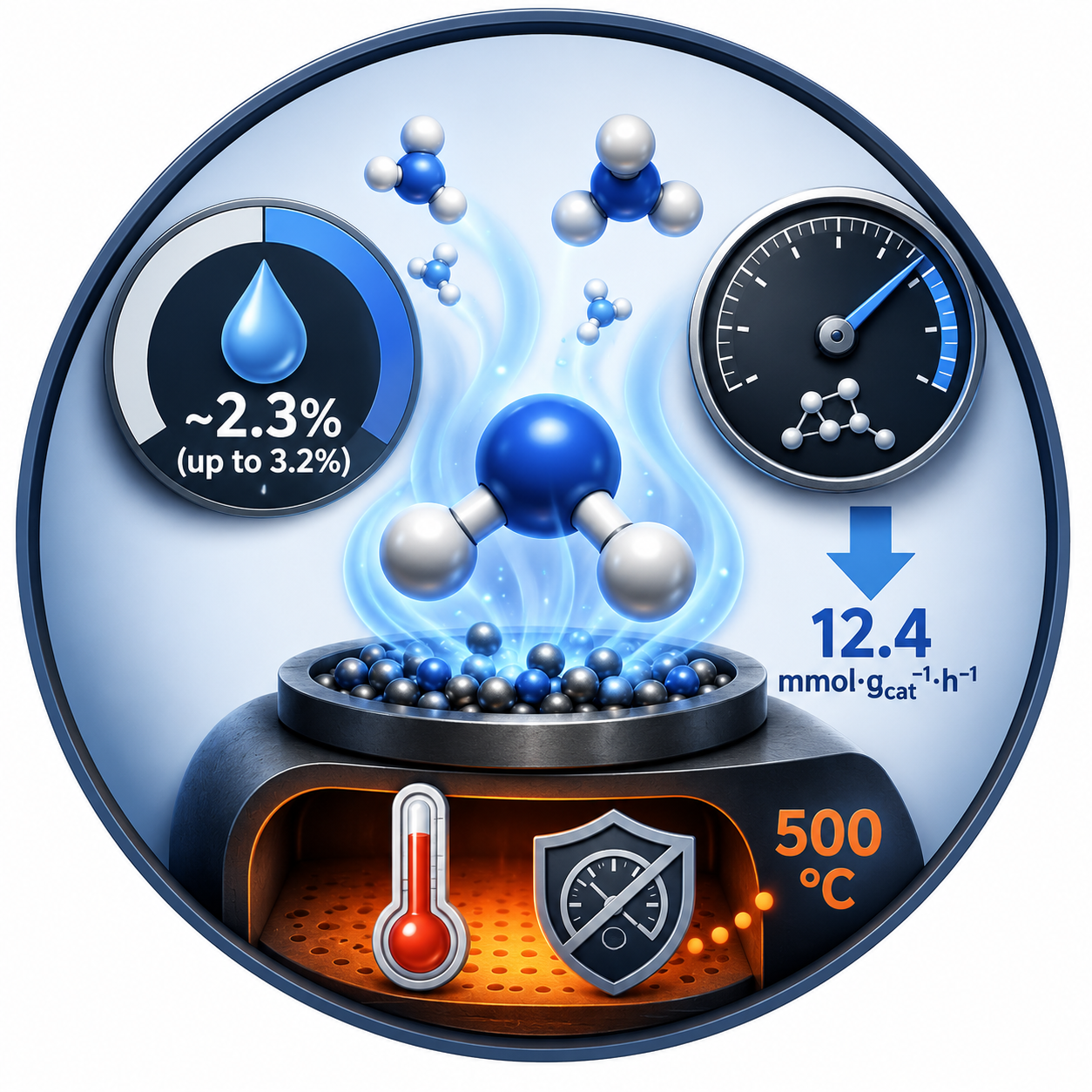
Maximum concentration of ~2.3% (up to 3.2% at higher space velocities).
Release rate: 12.4 mmol·gcat-1·h-1.
Operation at 500 °C without high pressures.
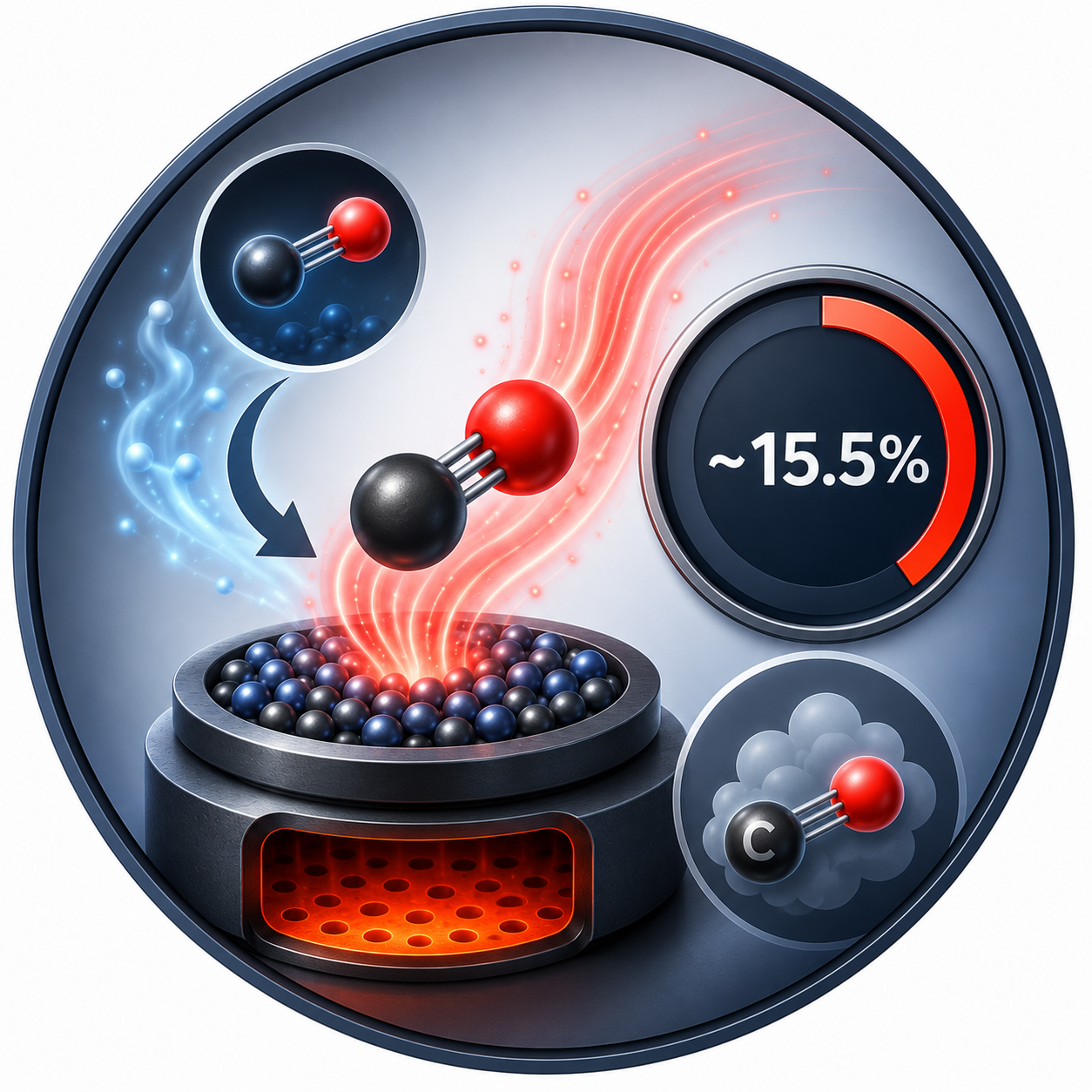
Reaching concentrations of approximately 15.5% during the NH3 release stage.
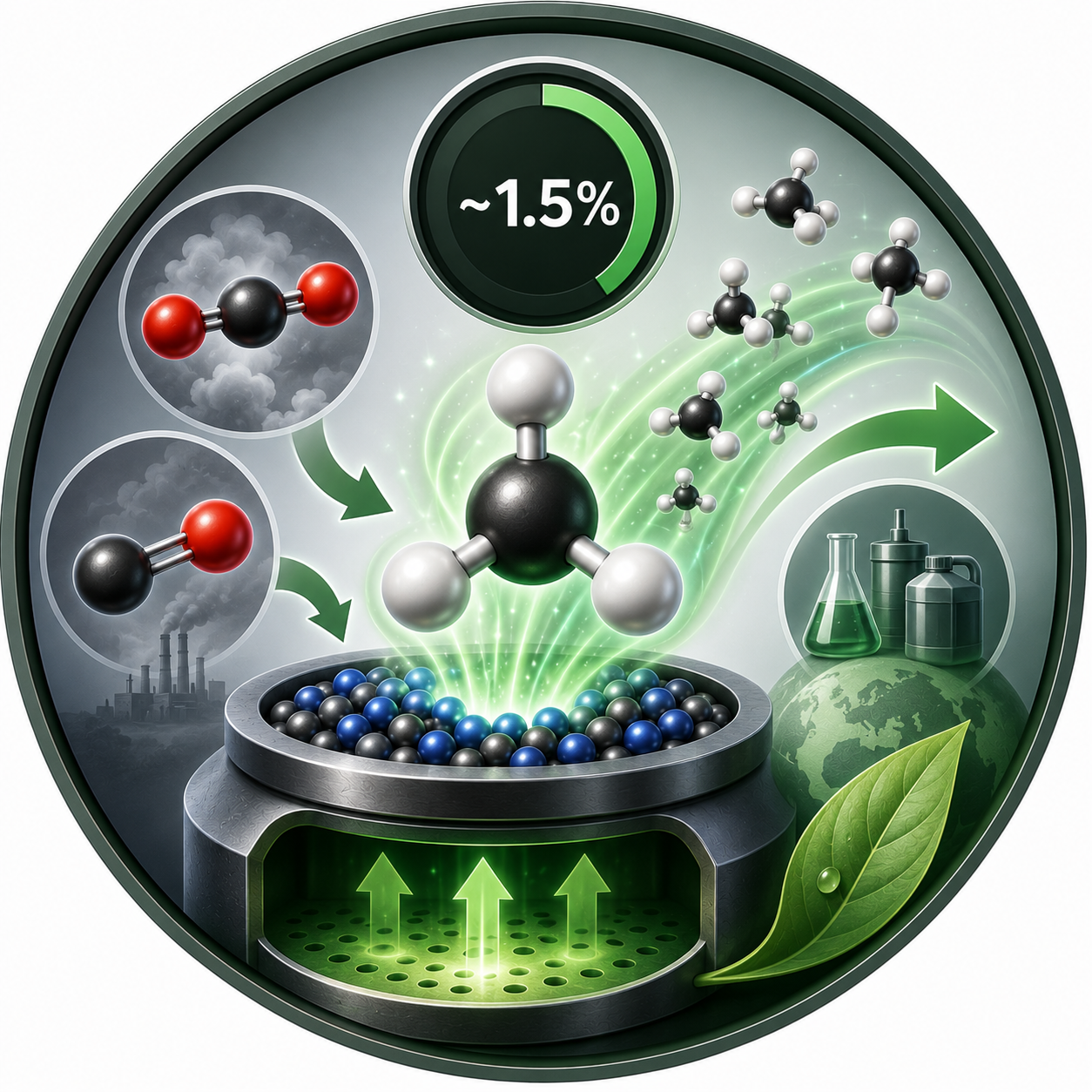
Reaching approximately 1.5%. Both CO and CH4 effectively transform greenhouse gas into valuable building blocks.
Another major strength of the work is the outstanding stability of the catalyst. Unlike other chemical looping processes that involve large structural transformations throughout the material, the changes here remain largely confined to the catalyst surface.
During operation:
As a result, the catalyst preserves its bulk crystal structure while maintaining stable performance over 30 hours of continuous cycling, with no significant loss of activity.
Although this technology is still in the laboratory stage, it demonstrates how dynamic surface engineering can overcome limitations that have long been considered unavoidable. Beyond ammonia production itself, the research shows that a gas traditionally viewed as an environmental burden, CO2, can instead become a functional chemical reagent, simultaneously improve process efficiency while generate valuable chemical feedstocks.
If successfully scaled to industrial production, this concept could pave the way for ammonia synthesis processes with significantly lower energy consumption, a reduced carbon footprint, and much closer integration between chemical manufacturing and CO2 utilization.
The development of processes like this highlights the growing importance of advanced materials and catalyst design in the next generation of chemical technologies. At MERYT Catalysts & Innovation, we closely follow the latest advances in heterogeneous catalysis, functional materials, and industrial decarbonization technologies, helping bridge cutting-edge research with practical solutions for more efficient and sustainable chemical processes.