
What if corrosion were no longer a problem… but instead became a self-sustaining chemical factory?
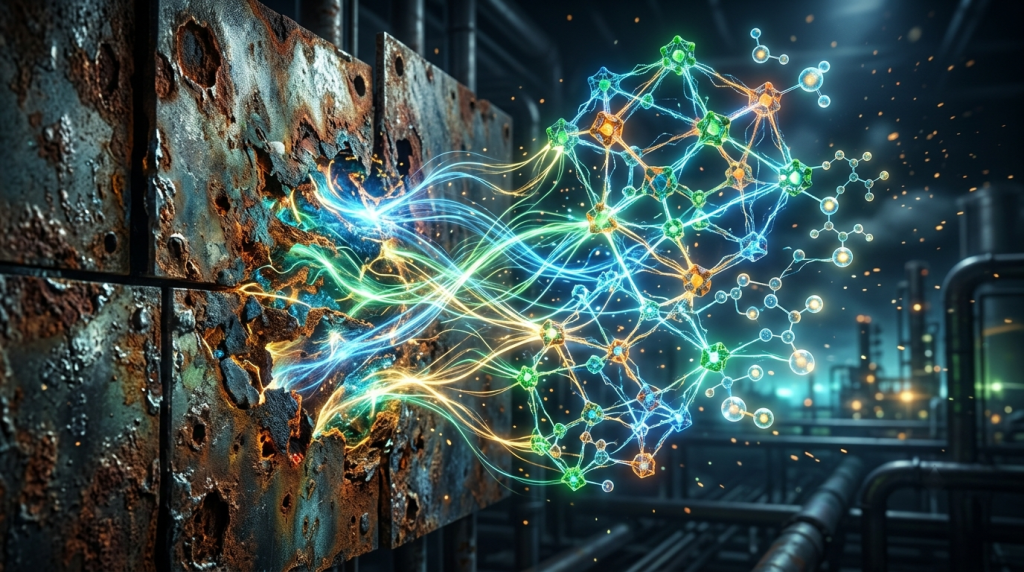
For decades, corrosion has been one of industry’s greatest enemies: millions in losses, structural failures and huge maintenance costs. But a recent paper published in Angewandte Chemie proposes a fascinating paradigm shift: transforming corrosion into a simultaneous source of energy, advanced materials and high-value chemicals.
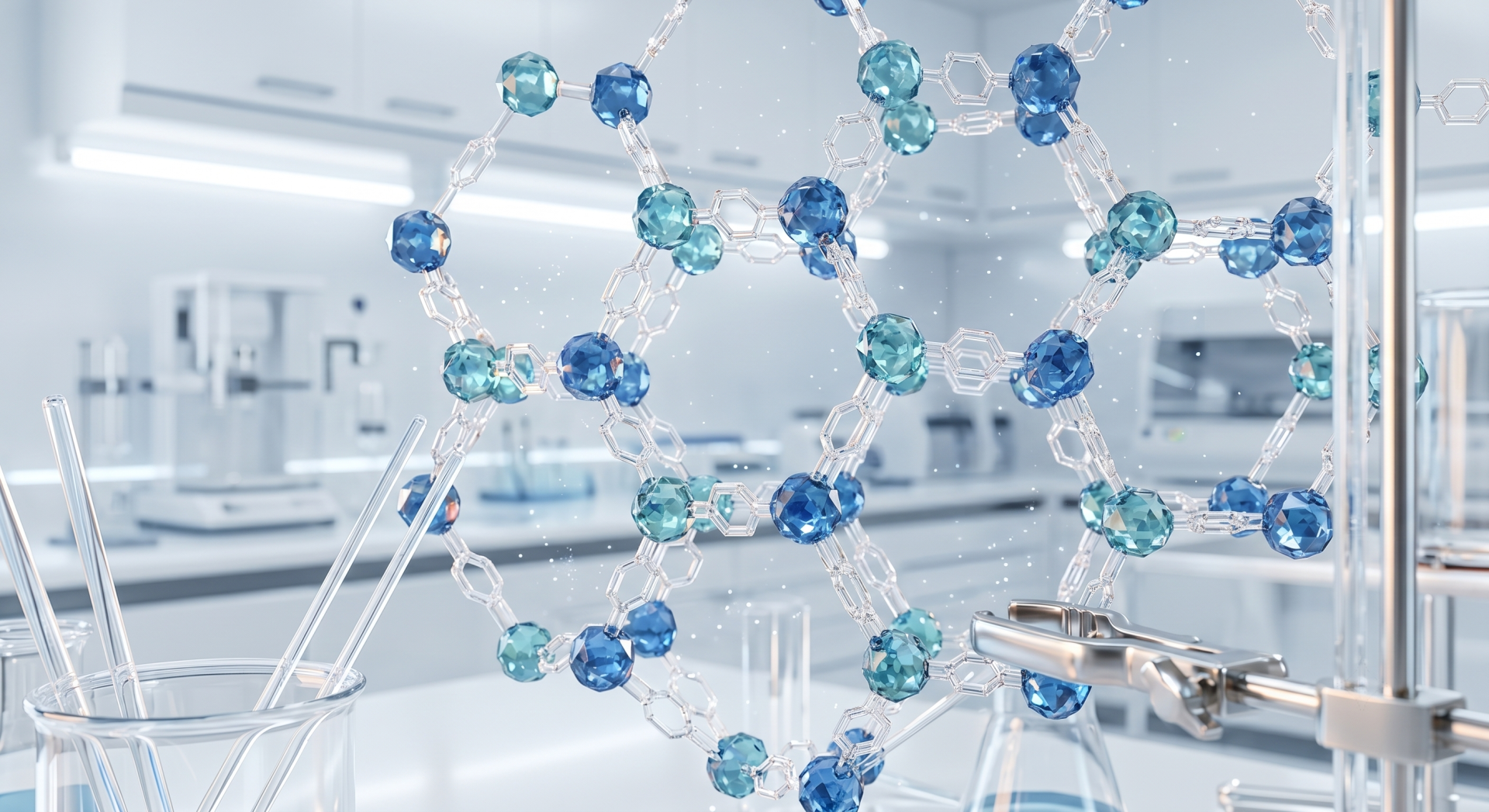
The study, entitled ‘From Corrosion to Creation: Interfacial De-Electronation Drives Hydrogenation-Energy Symbiosis’, proposes a ‘macroscopic corrosion battery’, an electrochemical system capable of harnessing galvanic corrosion to generate electricity while synthesising MOFs (Metal-Organic Frameworks) and chemical compounds used in pharmaceuticals and advanced materials.
Harnessing galvanic corrosion to generate electricity and synthesize advanced materials.
In conventional corrosion, the chemical energy released is mainly lost as heat. Here, the researchers spatially separate the reactions:
The metal ‘corrodes’ in a controlled manner and the metal ions generated are used to form MOFs and high-value metal oxalates.
The electrons released generate electricity and enable electrocatalytic hydrogenation reactions to take place.
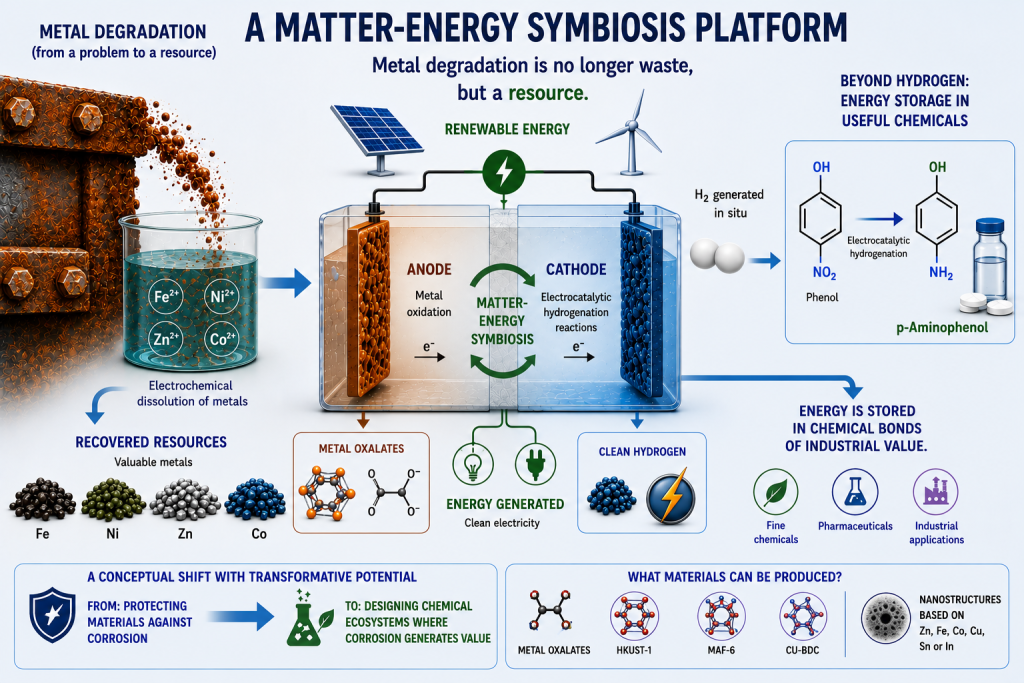
All this under mild conditions, without the high energy consumption typical of many traditional electrochemical or thermal processes.
The most interesting aspect is not just the battery; what is truly disruptive is the conceptual shift: we are moving from ‘protecting materials against corrosion’ to ‘designing chemical ecosystems where corrosion generates value’.
Thus, although significant challenges remain, this work opens up a very interesting avenue towards self-sustaining, decentralised and multifunctional chemical processes. And perhaps most powerfully of all: it transforms a historically destructive phenomenon into a platform for creating materials, chemicals and energy. The question is no longer how to prevent corrosion, but how much value we can extract from it.
Read the full scientific article here: