Propylene is one of the most essential building blocks in the petrochemical industry, ranking as the second most produced olefin globally after ethylene. With global demand exceeding 120 million metric tons annually, propylene serves as a critical feedstock for a wide range of products, most notably polypropylene (PP)—a versatile polymer used in packaging, automotive components, textiles, and consumer goods.
As demand for polypropylene continues to rise, traditional sources of propylene, such as naphtha steam crackers and fluid catalytic cracking (FCC) units, have struggled to keep pace. This has led to a significant shift toward on-purpose propylene production technologies, with Propane Dehydrogenation (PDH) emerging as the leading process due to its efficiency and product purity.
Propane Dehydrogenation: Process Insights
Since its commercial introduction in the early 1990s, the Propane Dehydrogenation (PDH) process has become a cornerstone technology for on-purpose propylene production, effectively addressing the growing gap between propylene supply and demand.
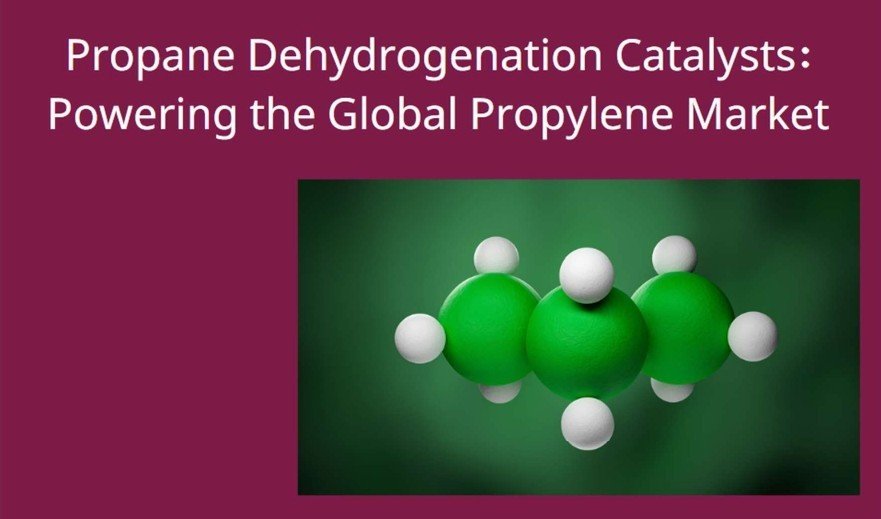
The PDH process converts propane (C₃H₈) into propylene (C₃H₆) and hydrogen (H₂) through a highly endothermic dehydrogenation reaction:
C₃H₈ → C₃H₆ + H₂ ΔH=+124kJ/mol
This equilibrium-limited reaction is typically carried out at high temperatures, ranging from 600°C to 680°C, under low pressures to favor the forward reaction. To shift the equilibrium and maximize propylene yield, hydrogen is continuously removed from the reaction environment, either through purge streams or selective membranes in some advanced processes.
Two primary reactor configurations dominate the PDH industry, each with distinct operational characteristics and catalyst requirements:
- Moving Bed Reactors (e.g., Oleflex™ by Honeywell UOP)
- Run in continuous mode with catalyst circulating between the reactor and regenerator.
- Demand catalysts with excellent mechanical strength and attrition resistance.
- Offer steady-state operation with high on-stream factors.
- Fixed Bed Reactors (e.g., CATOFIN® by Clariant & Lummus)
- Operate in cyclic mode: alternating reaction and regeneration phases.
- Require catalysts with high thermal stability and coke resistance.
- Known for high selectivity and simpler reactor design.
Both reactor types present unique catalyst challenges, particularly regarding coke formation, thermal stress, and maintaining consistent activity over long cycles.
Catalyst Technology: The Heart of PDH Efficiency
The performance of a PDH unit—whether fixed bed or moving bed—is fundamentally tied to the catalyst. An ideal PDH catalyst must balance high activity, selectivity, and stability, while addressing the specific demands of each reactor type.
With over 20 million metric tons of on-purpose propylene produced annually via PDH, the demand for high-performance dehydrogenation catalysts is significant. A single world-scale PDH plant (~750 KTA capacity) typically requires 200–300 metric tons of catalyst, depending on reactor design and operating conditions.
As PDH capacity continues to grow—particularly in China, the Middle East, and the United States—so does the need for catalysts that deliver higher yields, longer cycle lengths, and reduced operational costs.
MERYT PDH-73: Our Solution for PDH Plants
At MERYT Catalysts & Innovation, we supply the PDH-73—a last-generation dehydrogenation catalyst optimized for moving bed PDH processes.
MERYT PDH-73 offers:
- High activity for maximum propane conversion.
- Excellent selectivity for high-purity polymer-grade propylene.
- Outstanding stability with low coke formation and superior regeneration capability.
- Low catalyst addition rates, reducing operational costs, especially in moving bed units.
- Superior mechanical strength and attrition resistance for long-lasting performance.
If you are interested in learning more about MERYT PDH-73 and how it can optimize your PDH operations, feel free to contact our technical team.
Email us at: info@meryt-chemical.com